

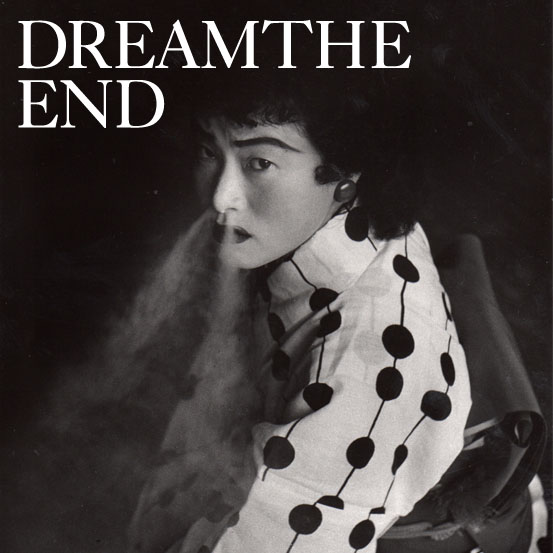
Sanbusaku 1 三部作 (1)
Dream The End explores Japan in a three-part edition. The first installment, inspired by a line from Fujiwara Teika's Superior Poems of Our Time: A Collection of 13th Century Japanese Poems, "Where These Set Forth and Those Return", is an exploration into the monochromatic black and white palette of what is commonly recognized as the classic nature of Japanese fine art. Featured in this edition are 22 Japanese artists working in photography, porcelain, architecture, installation, performance and literature, who retain these sentimental moments that transcend time and space.
Featuring cover artwork by Shomei Tomatsu
Daido Moriyama
Daido Moriyama, born in 1938 in Osaka, is one of Japan's most important photographers best known for his street scenes depicting the breakdown of traditional values in post-war Japan. In 1961, Moriyama moved to Tokyo and became an assistant of Eikoh Hosoe. In 1964, he started his career as a freelance photographer. Moriyama's output since 1968 is legendary. He has produced over 150 photography books and had over 100 solo exhibition worldwide. He was a central figure at MoMA's 1974 "New Japanese Photography" exhibition and the 2012 exhibition "Tokyo 1955-1970: A New Avant-Garde".
In 2012, Moriyama received Lifetime Achievement award at the 28th Annual Infinity Awards by International Center of Photography.
Daido Moriyama is featured in Sanbusaku 1 三部作
Eikoh Hosoe
Eikoh Hosoe was born in Yonezawa, Yamagata in 1933 and graduated from Tokyo College of Photography in 1951. He exhibited in his first solo show in 1956 and has since established himself as an internationally acclaimed photographer. Eikoh Hosoe’s work has been exhibited in the International Center of Photography and Museum of Modern Art, New York; the Nikon Salon, Tokyo; the Victoria and Albert Museum, London, and the Smithsonian, Washington D. C. Published works include: Man and Woman, 1959, Embrace, 1971, The Cosmos of Gaudi, 1986 and Eikoh Hosoe, 1986, among numerous others. He has been a professor of photography at Tokyo Institute of Polytechnics since 1975 teaching various photography workshops worldwide.
Images featured here are from “Kamaitachi”, published by The Aperture Foundation in 2009 and originally published in 1969 as a limited edition photo book of 1000 pieces.
Eikoh Hosoe is featured in Edition: Out Of This World and Sanbusaku 1 三部作
Fujiwara Teika
Fujiwara Teika (1162-1241) was a Japanese poet and literary theorist of the late Heian and early Kamakura period. He ranks among the greatest poets in the history of Japanese literature. Teika is best known for verse of haunting beauty and rich symbolism. His ideal of Yoen (ethereal beauty) was a unique contribution to the poetic tradition of Japan.
All of these featured poems are taken from Fujiwara Teika's "Superior Poems of Our Time", translated by Robert H. Brower and Earl Miner, a thirteenth century collection of Japanese poetry. The work consists of a short critical essay by Teika and a carefully arranged sequence of eighty-three poems by other hands. His essay discusses the state of poetry in the early thirteenth century and offers advice and standards for aspiring poets; the sequence of poems teaches the same standards by example.
Despite the title, the poems are taken from the full range of Japanese poetry to Teika's time, with emphasis on the preceding three centuries. Perhaps the most striking characteristic of the sequence is its unique construction. As the translators demonstrate in their introduction and commentary, the poems are linked by subtle techniques of association and progression into a unified whole that can be read as a single long poem of more than 400 lines.
books.google.com/books/FujiwaraTeika
Fujiwara Teika is featured in Sanbusaku 1 三部作
Hiroshi Sugimoto
Hiroshi Sugimoto was born in Tokyo, Japan in 1948. In 1970, Sugimoto studied politics and sociology at Saint Paul's University in Tokyo. In 1974, he received his BFA at the Art Center College of Design in Los Angeles and then moved to New York. Visually capturing memory and time is a central theme of Sugimoto's work. Some of his subjects include seascapes, theaters, dioramas, portraits, architecture, colors of shadow, conceptual forms and lightning fields among others.
His work is held in numerous public collections including The Metropolitan Museum of Art, New York, Museum of Contemporary Art, Tokyo, The National Gallery, London, The National Museum of Modern Art, Tokyo, Smithsonian Institue of Art, Washington, D.C., and Tate, London. Sugimoto currently lives and works in New York and Tokyo.
Hiroshi Sugimoto is featured in Sanbusaku 1 三部作 and Edition: Paradise Found
Ikko Narahara
Ikko Narahara is a self taught photographer born 1931 in Fukuoka, Japan. He studied law at Chuo University, and received an MA in art history at Waseda University in 1959. His first solo exhibition "Ningen no Tochi" (Human land) at the Matsushima Gallery in 1956 brought him instant recognition, and helped him decide to launch a professional career in photography. From 1962 to 1965, Narahara lived in Paris and took photographs in France, Spain and Italy. Following his return to Japan, Narahara showed an increased interest in traditional Japanese culture, which is especially evident in his photographic series "Zen."
In the early 1970s, he traveled to the US and took one of his best-known series "Where Time Has Vanished." In 1974, Narahara took part in the first exhibition of 'New Japanese Photography' at the Museum of Modern Art, and since then his work has been acclaimed internationally.
In 1967, Narahara won the Photographer of the Year Award from the Japan Photo Critics Association. From 1999 to 2005, he taught at the Graduate School of Kyushu Sangyo University in Fukuoka.
only-photography.com/ikko_narahara
Ikko Narahara is featured in Sanbusaku 1 三部作
Issei Suda
Issei Suda was born in Tokyo in 1940 and graduated from the Tokyo College of Photography in 1962. From 1962 to 1970, he worked as a cameraman for the avant-garde theatre group Tenjo Sajiki. Since 1971, he has worked as a freelance photographer and taught at Osaka University of Art.
Suda's black and white portraits and street scenes are especially influential in Japanese photography. His work is featured in many major museum collections around the world, including SFMoMa, Museum of Fine Arts, Houston and The J.Paul Getty Museum. His publications include Fushi Kaden(1978), My Tokyo 100 (1979), Human Memory (1996) and Minyou Sanga (2007). Human Memory won the Domon Ken price in 1997.
Issei Suda is featured in Sanbusaku 1 三部作
Junichiro Tanizaki
Jun'ichiro Tanizaki, born 1886 in Tokyo, was a one of the major writers of modern Japanese literature. He studied Japanese classical literature at Tokyo Imperial University from 1908, but dropped out in 1911. Tanizaki is best known for his stories about the influence of the West on the old cultural heritage of his native country, and his depiction of a shocking world of sexuality and destructive erotic obsession in some of his works. His representative works include Naomi, A Portrait of Shunkin, In Praise of Shadows, and The Makioka Sisters.
amazon.com/In-Praise-Shadows-Junichiro-Tanizaki
Jun'ichiro Tanizaki is featured in Sanbusaku 1 三部作
Kazuo Ohno
Kazuo Ohno, one of the most inspirational figure in Butoh dance, was born in Hakodate City, Hokkaido in 1906. In 1926, Ohno entered the Japan Athletic College. After graduation, he worked as a physical education teacher at Kanto Gakuin High School. Ohno started to learn dancing with two of Japan's modern dance masters, Baku Ishii and Takaya Eguchi. In 1938 Ohno was drafted into the Japanese Army, and went to the front in China and New Guinea for 9 years. In the 1950s, Kazuo Ohno met Tatsumi Hijikata, who inspired him to develop a new form of dance, which he named the Ankoku Butoh. In 1977, Ohno premiered his solo Butoh work directed by Hijikara, "La Argentina Sho," which became a Butoh masterpiece. Ohno remained active as a Butoh dancer after his 90th birthday. His last overseas performance was "Requiem for the 20th Century" held in New York on December 1999 when he was 93 years old. He was awarded a cultural award from Kanagawa Prefecture in 1993, a cultural award from Yokohama city in 1998 and the Michelagelo Antonioni Award for the Arts in 1999.
Kazuo Ohno is featured in Sanbusaku 1 三部作
Mariko Mori
Mariko Mori, born 1967 in Tokyo, is a Japanese artist currently based in New York. Mori worked as a fashion model while attending Bunka Fashion College. In 1989, she went to study at London's Chelsea College of Art and Design, before moving to New York in 1992. Mori's work is rooted in both traditional and modern Japanese culture. She is particularly interested in the interactions between the old and the new worlds in Japan and the contradictions in contemporary Japanese society. Mori uses technology to connect the present moment to the past and the future, creating visual representations of a interconnected universe. Her works including Birth of a Star (1995), Nirvana (1997), and Dream Temples (1999) among others are collected by The Guggenheim Museum in New York, The Museum of Modern Art in New York, The Prada Foundation in Milan, Centre Georges Pompidou in Paris, and The Israel Museum in Jerusalem.
scaithebathhouse.com/en/artists/mariko_mori
Mariko Mori is featured in Sanbusaku 1 三部作
Masahisa Fukase
Masahisa Fukase was born in 1934 in Hokkaido, Japan. In 1956, he graduated from Nihon University in Tokyo with a BA degree in Photography, and started to work for Dai-Ichi Advertising Company as a commercial photographer, but continued to pursue his artistic career. In 1961, his first solo exhibition "Buta wo Kurose" (Kill the Pigs) was held at Ginza A.G. in Tokyo. In 1974, Fukase established a photography school called The Workshop with Shomei Tomatsu, Eiko Hosoe, Noriaki Yokosuka, Daido Moriyama and Nobuyoshi Araki. The same year, his work was included in the exhibition "New Japanese Photography" at the Museum of Modern Art. In 1976, Fukase and his wife Yoko divorced and he returned to his hometown in Hokkaido. During this dark time, Fukase became obsessed with ravens, the harbingers of darkness and danger in Japanese mythology, and pursued the subject until he plunged into coma in 1992. The Solitude of Ravens, first published in 1986, remains his most powerful work.
Masahisa Fukase is featured in Sanbusaku 1 三部作
Masao Yamamoto
Masao Yamamoto was born in 1957 in Gamagori City, Aichi Prefecture, Japan. Originally trained as painter, he is nevertheless known for his small photographs with frayed edges and color additions. Yamamoto's work, often described as photographic haiku, has a strong power of silence and suggestion that is typical in traditional Japanese aesthetics. Yamamoto's work is exhibited and included in many public and private collection nationally and internationally including the Museum of Fine Arts, Houston, TX, Santa Barbara Museum of Art, Santa Barbara, CA, The International Center of Photography, New YorK, NY and the Sir Elton John Collection.
Masao Yamamoto is featured in Sanbusaku 1 三部作
Miya Ando
Miya Ando is a Japanese-Russian/American artist born in 1978 in Los Angeles and raised between a Buddhist temple in Okayama, Japan and coastal Santa Cruz, California. Ando graduated from UC Berkeley and left a Master's in East Asian Studies at Yale to become an apprentice to a master metal smith in Japan. She is a descendant of Bizen sword maker Ando Yoshiro Masakatsu, and honors her lineage by exploring impermanence, transformation and transcendence through metals and light. Ando has exhibited both nationally and internationally. Her work is included at Aldrich Contemporary, the Newhouse Center fro Contemporary Art, the Byzantine Museum in Greece, and in Chapman University's private collection.
Miya Ando currently lives and works in Brooklyn, New York.
Miya Ando is featured in Sanbusaku 1 三部作
Motoi Yamamoto
Motoi Yamamoto, born in Onomichi, Hiroshima, Japan received his B.A. degree from Kanazawa College of Art in 1995. He has exibited in Japan, USA, France and Germany.
He is best known for his immense site-specific salt installations. Salt is traditionally used as a symbol for purification and mourning, and Yamamoto uses salt to help himself cleanse his grief after the death of his sister. His work revolves around the theme of life, death, and rebirth. He is the winner of Philip Morris Art Award 2002.
Motoi Yamamoto is featured in Sanbusaku 1 三部作
Nagae Shigekazu
Nagae Shigekazu, born in 1953 in Seto, Aichi, is one of the leading porcelain artists in Japan. He graduated from Seto Ceramics High School in 1972, and completed the Special Study Course of Ceramics at the same school. His work is best known for its abstract form and natural movement which normally cannot be achieved through casting. His ingenious porcelain casting techniques are acclaimed internationally. His works have been acquired by the V&A in London, the Los Angeles County Museum of Art, and the National Gallery of Australia among other public and private collection.
Nagae Shigekazu is featured in Sanbusaku 1 三部作
Shoji Ueda
Shoji Ueda, a Japanese photographer born on March 27, 1913 in Sakai, Tottori Prefecture, is known for his surrealistic photographs. Among them, his portraits taken on the sand dunes of Tottori are the most celebrated.
In 1930, Ueda received his first camera from his father, and one year later he moved to Tokyo to attend the Oriental School of Photography. After graduating at the age of nineteen, he returned to his hometown and opened his own photo studio, Ueda Shashinjo. In the same year, he joined the Japan Photography Association and began to establish a reputation as a professional photographer. Ueda married in 1935; his wife and three children are recurring models in his works.
During World War II, Ueda kept away from photography, not willing to serve as a military photographer. Shortly after the war in 1947, he resume his career. In 1954, He won the Nika Prize, and in 1958 his works were selected for exhibition "Japanese Photography" at the Museum of Modern Art in New York. The Shoji Ueda Museum of Photography, dedicated to his works, opened in Kishimoto, Tottori Prefecture in 1995.
Ueda died of a heart attack on July 4, 2000.
Shoji Ueda is featured in Sanbusaku 1 三部作
Shomei Tomatsu
Shomei Tomatsu was born in 1930 in Nagoya, Japan. He graduated from Aichi University with a degree in economics in 1954. As a economic student and a self taught photographer, Tomatsu's photographs were published by leading Japanese magazines. After graduation, he worked at Iwanami Shoten publishing agency for two years and then left to become a freelance photographer. He established VIVO, a photography cooperative along with Eikoh Hosoe and Ikko Narahara.
Tomastsu is best known for his photographs from the book Hiroshima-Nagasaki Document 1961, which reflects the social change in Japan during the post-war US occupation.
Shomei Tomatsu is featured in Sanbusaku 1 三部作
Sueharu Fukami
Sueharu Fukami, born 1947 in Kyoto is one of the world's leading porcelain sculptors. He is often associated with his distinguishing porcelain slip-casting technique and the supple curves and sharp silhouettes of his abstract porcelain works. Fukami studied ceramics at the Kyoto Arts and Crafts Training Center and graduated in 1965. In 1985, he participated in the Premio Faenza and won the grand prize. One year later, he held his first international solo exhibition in Faenza, Italy, which established his international reputation. His works are displayed in over 40 different public institutions such as the British and V&A Museums in London, the Brooklyn Museum and the Art Institute of Chicago, among many others.
Sueharu Fukami is featured in Sanbusaku 1 三部作
Tadao Ando
Tadao Ando is a renowned Japanese architect, born 1941 in Osaka. Ando's architectural style, strongly influenced by Japanese aesthetics, emphasizes the beauty of emptiness and simplicity of space. He has designed many notable landmarks in the world, including Row House in Sumiyoshi, Osaka (1976), Church of Light, Osaka (1989), Pulitzer Foundation for the Arts, St. Louis (2001), Armani Teatro, Milan (2001). He received Gold Medal of Architecture, Academie d'Architecture in 1989, The Pritzker Architecture Prize in 1995, Gold Medal of the American Institute of Architects in 2002, among other awards. He was also a visiting professor at Yale, Columbia, UC Berkeley, and Harvard University.
Tadao Ando is featured in Sanbusaku 1 三部作
Tokujin Yoshioka
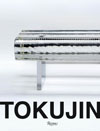
Tokujin Yoshioka is a Japanese designer based out of Tokyo. He is considered one of the most innovative contemporary designers, utilizing unconventional materials to create objects and spaces. His work is in the permanent collections of leading design museums, including MoMA New York, the Victoria and Albert in London, and the Centre Pompidou in Paris. Yoshioka studied and worked under Issey Miyake and Shiro Kuramata before establishing his own practice in 2000. He has collaborated with Hermès, Cartier, and Swarovski, and some of his most famous designs include the Honey-Pop Chair, Tokyo-Pop Chair, Venus Chair, and Panna Chair.
Tokujin Yoshioka was published by Rizzoli New York in October 2010. It was written by Tokujin Yoshioka and Kazuo Hashiba.
Tokujin Yoshioka is featured in Edition: Rizzoli: New York and Sanbusaku 1 三部作
Yasuzo Nojima
Yasuzo Nojima, born in 1889 in Saitama Prefecture, is one of the most important photographers in the history of modern Japanese photography. In the early 1930s, under the influence of new trendsin German photography, he introduced a new photographic aesthetic to Japan, that focused on the technical and aesthetic qualities of photography in its own right rather than as an derivative form of paintings. He published the photography magazine Koga (Light Pictures) with Nakayama Iwata and Kimura Ihei from 1932 to 1933. Although short-lived, it is now considered as one of the most important records of the New Photography school.
iphf.org/hall-of-fame/yasuzo-nojima
Yasuzo Nojima is featured in Sanbusaku 1 三部作
Yukio Mishima
Yukio Mishima, born in 1925, was a Japanese author, poet, actor and film director. He graduated from the University of Tokyo in 1947 and obtained a position as an official in the government's Finance Ministry. However, he resigned during the first year and became a professional writer. Mishima is considered one of the most important Japanese authors of the 20th century. He was nominated three times for the Nobel Prize in Literature. His major works include Thirst for Love, The Sailor Who Fell From Grace with the Sea, The Temple of the Golden Pavilion, and The Sea of Fertility tetralogy. Mishima was also known for his natural bodybuilding and modeling career. He was featured as a photo model in Eikoh Hosoe's Ba-ra-kei: Ordeal by Rose.
egs.edu/library/yukio-mishima/biography
Yukio Mishima is featured in Sanbusaku 1 三部作
Zeami
Born in 1363, Zeami, also known as Kanze Motokiyo, is one of the greatest playwrights and theorists of Japanese Noh theatre. The modern form of Noh theatre is credited to Zeami and his father, Kan'ami. Zeami is credited with approximately 90 of the existent 230 Noh plays. In 1422, he retired to become a Zen monk, allowing his son to succeed him. He passed away in 1443.
Zeami is featured in Sanbusaku 1 三部作