

Guest Editor: Stephan Breuer
Stephan Breuer is a Paris based conceptual artist. His works are based at the intersection of science, philosophy and religion; in his artistic language, every space, architecture, object, behavior, and vibration is a signal, a semiotic resource. He has collaborated with architects, engineers, designers, and fellow artists to realize his works. Look out for Breuer's upcoming exhibition "Ultra Light" at the Palais Royal in Paris, France. Cloud Theory is inspired by the dreams, magic, and wonder that can be drawn from the sky overhead.
Andy Warhol
Born in Pittsburgh, Pennsylvania on August 6, 1928, to Slovakian immigrants, Andy Warhol is one of the most iconic American artists of the twentieth century. He attended the Carnegie Institute for Technology (now Carnegie Mellon University) from 1945-49. Upon graduation, he moved to New York City to pursue a career as a commercial artist, landing jobs with Columbia Records, Harper’s Bazaar, Vogue, NBC, Glamour magazine, among others. Warhol began devoting more time to painting, and in 1962, he debuted the concept of Pop Art with an exhibition of his now famous Campbell’s soup can paintings. Warhol opened his own studio in 1964 which was known as “The Factory”, and it quickly became a cultural icon and hotspot in the city. In 1968 Warhol was shot and seriously wounded by Valerie Solanas, an aspiring writer and radical feminist. He spent weeks in the hospital recovering. Warhol continued to work throughout the 1970s and 80s until his death on February 22, 1987.
Andy Warhol is featured in Edition: Guest Editor, Stephan Breuer
Anish Kapoor
Anish Kapoor was born in Bombay, India in 1954. He studied at Hornsey College of Art from 1973-77 and then completed his postgraduate studies at Chelsea School of Art, London from 1977-78. He is most well known for his public sculptures, which are frequently characterized by their play with spatial comprehension. In 1990, he represented Britain at the 44th Venice Biennale and received the Premio Duemila prize, and the following year, he won the Turner Prize. Kapoor was awarded a Knighthood in 2013 for his contributions to the visual arts and received an honorary doctorate decree from the University of Oxford in 2014. He currently lives and works in London.
Anish Kapoor is featured in Edition: Guest Editor, Stephan Breuer
Anton Ginzburg
Artist and filmmaker, Anton Ginzburg was born in 1974 in Saint Petersburg, Russia and received a classical arts education before immigrating to the US in 1990. He received his BFA from Parsons The New School for Design in 1997 and earned his MFA from Bard College, Milton Avery Graduate School of the Arts. He lives and works in New York.
Anton Ginzburg is featured in Edition: Guest Editor, Stephan Breuer
Bill Hicks
Born in 1961 in Valdosta, Georgia, William Melvin “Bill” Hicks was an American comedian, social critic, satirist and musician. His material, encompassing a wide range of social issues including religion, politics, and philosophy was controversial and often steeped in dark comedy. He saw himself as a flame, Shiva The Destroyer, using comedy a weapon to expose truths about our society’s government and politics. Hicks suffered from drug and alcohol abuse and passed away in 1994.
Bill Hicks is featured in Edition: Guest Editor, Stephan Breuer
Chris Burden
Chris Burden was born in 1946 in Boston, Massachusetts. He received a BFA from Pomona College in Claremont, California and a MFA from the University of California at Irvine. He became the first artist to be represented by Larry Gagosian in 1978. Burden’s works from the early 1970s were visceral performances where he had himself shot, locked up, electrocuted, cut, or crucified. The daring nature of these early performances translated into his sculptural work, as he created huge, intricate, imposing works. He passed away in Topanga, California in 2015.
gagosian.com/artists/chris-burden-2
Chris Burden is featured in Edition: Guest Editor, Stephan Breuer
Christo and Jeanne-Claude
Christo and Jeanne-Claude The artist couple Christo and Jeanne-Claude were born on the same day, June 13, 1935; Christo was born in Bulgaria and Jeanne-Claude in Morocco. The pair first met in Paris in 1958, and they had a son Cyril on May 11, 1960. They are known for their large-scale land artworks of wrapped monuments and outdoor sculptural installations. Until 1994, the works were only attributed to Christo; however, they have since been retroactively attributed to Christo and Jeanne-Claude. In November 2009, Jeanne-Claude passed away, and Christo continues to work.
Christo and Jeanne-Claude are featured in Edition: Paradise Found and Edition: Guest Editor, Stephan Breuer
Claude Debussy
Born as Achille-Claude Debussy on August 22, 1862 in Saint-Germain-en-Laye, France, Claude Debussy is one of the great composers of the 20th century. At a young age, he showed musical talent and entered the Paris Conservatory in 1873. He won the 1884 Grand Prix de Rome for his cantata L’Enfant prodigue (The Prodigal Child), which allowed him a three-year stint at the Villa Medici in Rome; however, he left Rome to return to Paris after just two years. Debussy’s compositions expressed many of the same ideals as his contemporary Impressionist and Symbolist painters and writers. He challenged the traditional orchestral use of instruments and frequently used atonality. Debussy passed away from cancer on March 25, 1918.
britannica.com/biography/Claude-Debussy
Claude Debussy is featured in Edition: Guest Editor, Stephan Breuer
Claude Monet
Born in Paris and raised in Le Havre, France, Claude Monet is one of the most iconic figures of Impressionism. He moved to Paris in 1859 and met future Impressionists Camille Pissarro and Pierre-Auguste Renoir, and they soon began painting together outdoors, or en plein air. Monet was one of the organizers of the Société Anonyme des Artistes, Peintres, Sculpteurs, Graveurs, etc., which after their inaugural exhibition in 1874, soon became known as the Impressionists. The origins of the name is due to one of Monet’s negatively reviewed paintings entitled Impression: Sunrise. Monet’s paintings render atmospheric light and nature using broken, rhythmic brushstrokes that embody a multitude of colors. Towards the end of his life, Monet began to lose his eyesight, and the resulting paintings are even more abstracted and loose in composition. He passed away in Giverny on December 5, 1926.
Claude Monet is featured in Edition: Guest Editor, Stephan Breuer
Collection of Meditative Sounds
The pieces included in this category are from various sources, all striving to induce states of meditation and concentration.
For more information on: Tibetan Singing Bowls, Binaural Beats, Brainwave Relaxation
Collection of Meditative sounds are featured in Edition: Guest Editor, Stephan Breuer
Constantin Brâncuși
Constantin Brâncuși was born in Hobitza, Romania on February 19, 1876. He studied at the Scoala de Meserii in Craiova (School of Arts and Crafts) from 1894-98 and the Scoala National de Arte Frumoase (National School of Fine Arts) in Bucharest from 1898-1901. He then moved to Paris in 1904 and enrolled in the Ecole des Beaux-Arts the following year. In 1906, one of his sculptures was shown at the Salon d’Automne, where he met fellow sculptor Auguste Rodin. Five of Brâncuși’s sculptures were included in the famous 1913 Armory Show in New York, and Alfred Stieglitz’s 291 New York gallery was the location of his first solo exhibition in 1914. Brâncuși exhibited in Europe and the US for the following years and began traveling extensively in the 1930s. His final sculpture, Grand Coq, was completed in 1949, and he passed away in Paris on March 16, 1957.
paulkasmingallery.com/artists/constantin-brancusi
Constantin Brâncuși is featured in Edition: Guest Editor, Stephan Breuer
Cy Twombly
Edwin Parker “Cy” Twombly, Jr. was an American painter, sculptor and photographer born in 1928 in Lexington, Virginia. In 1950, he arrived in Manhattan and was convinced by Robert Rauschenberg to participate in the 1951-52 sessions at Black Mountain College near Asheville, North Carolina. In 1957, he left for Rome, Italy, where he would remain for most of the rest of his life. Twombly’s first solo show was held at the Leo Castelli Gallery in New York in the fall of 1960. The Whitney Museum of American Art mounted a retrospective of his work in 1979. The exhibition was critiqued for being “too European”, as Twombly was still based in Rome and his work was not typical of American art at the time. He continued to work into old age; Twombly passed away on July 5, 2011 in Rome.
Cy Twombly is featured in Edition: Guest Editor, Stephan Breuer
Dan Graham
Dan Graham was born in 1942 in Urbana, Illinois. Since the 1960s, Graham has created work that questions the relationship between architecture and its psychological effects on us. Beginning his career as a writer, he founded and directed the John Daniels Gallery in New York in 1964 at the age of 22 and exhibited the work of Conceptual and Minimalist artists, such as Donald Judd, Sol LeWitt, Dan Flavin, and Robert Smithson. Smithson, in particular, was also a large influence on Tom Burr. He soon began to create his own conceptual pieces, considering himself both writer and artist, taking much influence from the written word and magazine page. His breakthrough work was a series of magazine-style photographs with text titled Homes for America (1966-67). The Whitney Museum of American Art hosted his first retrospective in the United States in 2009. His body of work includes photography, video and performance art as well as glass and mirror sculptures. Graham continues to live and work in New York City.
lissongallery.com/#/artists/dan-graham/
Dan Graham is featured in Edition: Guest Editor, Tom Burr and Edition: Guest Editor, Stephan Breuer
Daniel Buren
French artist Daniel Buren was born in Boulogne-Billancourt, a suburb of Paris in 1938. He graduated from the Ecole Nationale Supérieure des Métiers d’Art, Paris in 1960. In 1965, Buren had developed his signature style of work, which is most known for alternating white and colored vertical stripes. Over the past 50 years, Buren has exhibited extensively; he has been the subject of retrospectives at the Guggenheim Museum in New York (2005) and the Centre Pompidou in Paris (2002). He’s exhibited at the Venice Biennale more than 10 times and was awarded the Golden Lion for his French Pavilion in 1986. In 2012, he was selected to exhibit at MONUMENTA 2012 at the Grand Palais in Paris. He currently lives and works in Paris.
Daniel Buren is featured in Edition: Guest Editor, Stephan Breuer
DeWain Valentine
DeWain Valentine is an American minimalist sculptor who was born in Fort Collins, Colorado in 1963. He is best known for his translucent glass, fiberglass and cast polyester resin sculptures having slick surfaces suggestive of machine made objects. These sculptures reflect and distort the light and space surround them. His contribution to the plastics industry made him stand out from his contemporaries working in these materials. His first New York solo show featured 12 feet tall Gray Columns and few of his “circles”- translucent, vibrantly colored sculptures that somehow don’t roll away. The mystery of the installation of the “circles” is part of their impact- they are beautiful because they are sometimes tough to suss out mentally. For Valentine, these works verge on having supernatural power.
DeWain Valentine is featured in Edition: Guest Editor, Stephan Breuer
Dominique Gonzalez-Foerster
Dominique Gonzalez-Foerster was born in Strasbourg, France in 1965. She grew up in Grenoble and graduated from the École du Magasin of the Centre National d’Art Contemporain de Grenoble in 1987 and from the Institute des Hautes Études en Arts Plastiques in Paris in 1989. Her work is cross-disciplinary, encompassing film, installation, video, and various forms of collaborative work, all focusing on the transformation of public and private spaces and the ways that spaces can affect human perception. She has had numerous international solo exhibitions and was given the Mies van der Rohe Award in 1996-97 and the Marcel Duchamp Award in 2002. She currently lives and works in Paris and Rio de Janeiro.
Dominique Gonzalez-Foerster is featured in Edition: Guest Editor, Stephan Breuer
Ed Ruscha
Ed Ruscha was born in Omaha, Nebraska in December 1937. In 1956, Ruscha moved to Los Angeles and attended Chouinard Art Institute (now CalArts), studying painting, photography, and graphic design. His work is characterized by a keen observance of American popular culture and a deadpan and profound inclusion of text. Ruscha's work is in museums and private collections worldwide. He currently lives and works in Los Angeles.
gagosian.com/artists/ed-ruscha
Ed Ruscha is featured in Edition: Love + Sex baby and Edition: Guest Editor, Stephan Breuer
Erik Satie
Eric Alfred Leslie Satie was born in Honfleur, France on May 17, 1866. He studied at the Paris Conservatory but dropped out and later worked as a café pianist. He moved to Arcueil, a suburb of Paris in 1898, and lived in seclusion. In 1905 he began studying at the Schola Cantorum under Vincent d’Indy and Albert Roussel, continuing for three years. The group Les Six, adopted him as their patron saint in 1917, and later the School of Arcueil was formed in his honor. He passed away on July 1, 1925 in Paris. Satie’s music represents the first definite break with the traditions of 19th century French Romanticism. It bears similarities with Dada and Surrealism in its disregard for traditional forms and structures, its flippant titles, Such as Troix morceaux en form de poire (1903; Three Pieces in the Shape of a Pear), and its directions to players, such as “with much illness”. Satie strove to remove the pretentiousness and sentimentality from music in order to reveal an austere essence.
theguardian.com/music/2015/jul/01/erik-satie-a-life-less-ordinary
Erik Satie is featured in Edition: Guest Editor, Stephan Breuer
Eugene Delacroix
Eugène Delacroix was one of the great French Romantic painters and colorists. He was born in France in 1798 and began studying painting at the age of 17. Delacroix was inspired by the Romantic Théodore Géricault's "Raft of Medusa" to paint his 1822 "The Barque of Dante". This painting was accepted into the Paris Salon of 1822 and caused quite a sensation and public outcry. Delacroix's work is characterized by expressive brushstrokes, intense drama, and a mastery of color. Following a trip to Spain and North Africa in 1832, Delacroix became a major figure in Orientalism. Delacroix died in Paris in 1863 and is buried in Père Lachaise Cemetery.
Eugène Delacroix is featured in Edition: Love + Sex baby and Edition: Guest Editor, Stephan Breuer
Fabrice Hyber
Fabrice Hyber is a French Conceptual artist, born in 1961, working in a mixture of art, science, and philosophy. All of his work is conceived in the form of a giant rhizome, or underground stem, with each work functioning as an evolving transitionary branch. In 1997, he represented France at the Venice Biennale, and the country’s pavilion was awarded a Golden Lion. Flammarion published a monograph on the artist in 2009.
Fabrice Hyber is featured in Edition: Guest Editor, Stephan Breuer
Félix González-Torres
Félix González-Torres was born in Cuba in 1957. He graduated with a BFA from Pratt Institute of Art and an MFA from New York University and the International Center of Photography. He has exhibited at the Guggenheim Museum and Whitney Museum of American Art in New York, the Serpentine Gallery in London, the Sprengel Museum in Hannover, and the Museo Universitario de Arte Contemporáneo in Mexico City. He passed away in 1996. The Félix González-Torres Foundation was created in 2002 “to foster an appreciation for the work of Félix González-Torres among the general public, scholars, and art historians.” His work is represented by the Andrea Rosen Gallery.
Excerpted from "Felix Gonzalez-Torres", published by steidldangin in 2006.
felixgonzalez-torresfoundation.org
Félix González-Torres is featured in Edition: Small Wonder and Edition: Guest Editor, Stephan Breuer
Fujiko Nakaya
Fujiko Nakaya was born in Sapporo, Japan in 1933. Her father is Ukichiro Nakaya, a celebrated physicist who is credited with making the first artificial snowflakes, and his influence can be seen in her works. For the 1970 World Expo in Tokyo, she collaborated with the artist collaborative Experiments in Art and Technology to create the world’s first fog sculpture, enveloping the Pepsi Pavilion in the mist. Since then, Nakaya has created numerous fog sculptures for institutions across the world.
exploratorium.edu/arts/artists/fujiko-nakaya
Fujiko Nakaya is featured in Edition: Guest Editor, Stephan Breuer
Georgia O'Keeffe
Georgia O'Keeffe was born on November 15, 1887. She studied at the Art Institute of Chicago, the Art Students League in New York, the University of Virginia, and Columbia University's Teachers College. While working as a teacher, some of O'Keeffe's charcoal drawings attracted the attention of photographer and gallery owner Alfred Stieglitz. The two became romantically involved, and were married in 1924. O'Keeffe first visited New Mexico in 1929, and she would continue to make almost annual trips there until eventually relocating there in 1949. In New Mexico, O'Keeffe discovered new subjects to paint, such as animal bones and southwestern landscapes. She passed away in 1986, and her ashes were scattered over the New Mexico landscape.
Georgie O'Keeffe is featured in Edition: Love + Sex baby, Edition: Guest Editor, Stephan Breuer and Edition: Best of the Met
Gerhard Richter
Gerhard Richter was born in 1932 in Dresden, Germany. He contributes art to many different mediums, including abstract and photorealistic painted works and photographs and glass pieces. He has shown at galleries and museums worldwide, including Galerie Bernd Lutze in Germany, Michael Shultz Gallery in Seoul, Galerie Marian Goodman in Paris, and Neue Nationalgalerie in Berlin.
Excerpted from "Gerhard Richter: Snow-White", published by Wako Works of Art in 2006.
Gerhard Richter is featured in Edition: Small Wonder and Edition: Guest Editor, Stephan Breuer
Gilles Deleuze
Gilles Deleuze was born in 1925 in the 17th arrondissement of Paris. He was a French philosopher who, from the early 1960s until his death, wrote influentially on philosophy, literature, film and fine art. Deleuze wrote many books dedicated to the work of other practitioners, and his work is full of unexpected references, often citing obscure authors. Immanence was a key word for Deleuze, returning time and again throughout his texts. The term refers to what he called his empiricist philosophy based on the empirical real without recourse to the transcendental. Deleuze insists that philosophy must approach the immanent conditions of that which it is trying to think. Thought must create movement and consequences. Deleuze passed away on November 4, 1995 in Paris.
Gilles Deleuze is featured in Edition: Guest Editor, Stephan Breuer
Giorgio Moroder
Giorgio Moroder is an Italian producer, songwriter, DJ, and performer. He was born in South Tyrol, Italy in April 1940. He played bass and guitar in pop-oriented ensembles while touring Europe and first gained popularity in 1969 with his single “Looky Looky”. He teamed up with Pete Bellotte and Donna Summer to create “Love to Love You Baby”, a song that is credited with starting the worldwide disco craze. Throughout his career, he has worked with numerous artists such as Barbara Streisand, Elton John, Cher, Janet Jackson, David Bowie, and Daft Punk. He has won three Academy Awards: Best Original Score for Midnight Express (1978), Best Song for “Flashdance…What a Feeling” from Flashdance (1983), and Best Song for “Take My Breath Away” from Topgun (1986). Moroder has also won four Grammy Awards, two of them were for his score for Flashdance; he also won for Best Dance Recording for the song “Carry On” (1998) and Album of the Year for his collaboration with Daft Punk’s 2014 album Random Access Memories. His most recent album, Déjà Vu was released in 2015 and reached number one on the US Billboard Dance/Electronic charts.
Giorgio Moroder is featured in Edition: Guest Editor, Stephan Breuer
Gustav Holst
Gustav Holst was born on September 21, 1874 in Cheltenham, England. His father Adolph was a professional pianist and his mother Clara, who passed away in 1882, was also a pianist as well as a singer. As a child, Holst was sickly, suffered from poor eyesight, and did not receive much parental attention. He was educated at Cheltenham Grammar School from 1886-91, showing an interest in composing. In 1891, he left for Oxford to study counterpoint for a few months with George Frederick Sims, the organist of Merton College. Holst then attended the Royal College of Music in London and studied under Charles Stanford until 1898. He married Isobel Harrison in 1901 and was appointed Director of Music at St. Paul’s Girls’ School in Hammersmith in 1905, where he would continue to teach until his death. Because of his teaching position, Holst was unable to devote large chunks of time to composing, but remained dedicated to the artform throughout his life. He passed away on May 25, 1934.
musicsalesclassical.com/composer
Gustav Holst is featured in Edition: Guest Editor, Stephan Breuer
Hannsjörg Voth
Hannsjörg Voth was born in Bad Harzburg, Germany in 1940. He attended the Staatlichen Kunstschule in Bremen from 1961-1965 and is most known as a land artist and sculptor. One of his most iconic works is the monument “City of Orion”, which was constructed in the desert of Morocco from 1997-2003. For Voth, these large observatory towers link mankind to the heavens and connect the sky to the earth.
Hannsjörg Voth is featured in Edition: Guest Editor, Stephan Breuer
Hans Richter
Born Johannes Siegfried Richter in Berlin, Germany in 1888, Hans Ricter was an avant-garde artist associated with Dada. From 1908-11 he studied at the Academy of Art in Berlin, the Academy of Art in Weimar, and the Académie Julian in Paris. In 1914, Richter joined Die Aktion, an association of Expressionist artists formed around Franz Pfemfert’s journal of the same name. He was inducted into the army in September 1914 but was soon severely wounded and removed from active duty. Before leaving for the war, Richter and two friends Ferdinand Hardekopf and Albert Ehrenstein made a pact to reunite in two years at the Café de la terrasse in Zurich. It was during this reunion that Richter was introduced to members of the Dada group, Tristan Tzara, Marcel Janco, and Georges Janco. Richter became an active member of Dada, and in the spring of 1918, Tzara introduced him to Viking Egging, a Swedish artist. The two co-authored a book on abstract theory in 1920 titled Universelle Sprache (Universal Language). They also produced a new kind of artwork, the abstract film, introducing time to the abstract visual language. Richter was eventually forced to flee before the onset of World War II, moving to the US in 1940. He taught at the Film Institute of City College of New York until he retired in 1962 and returned to Switzerland. He passed away there in 1976.
Hans Richter is featured in Edition: Guest Editor, Stephan Breuer
Harry Holland
Harry Holland is a contemporary, figurative and realist painter that is based in Cardiff, South Wales. Holland was born in Glasgow in 1941 and trained at St. Martin’s School of Art from 1965-1969. Since his graduation, he has had over 30 solo exhibitions and participated in countless group exhibitions worldwide. Holland’s paintings are suggestive in the sense that they imply situations, events or relationships that are not directly expressed, filling them with an engaging sense of mystery.
Harry Holland is featured in Edition: Guest Editor, Stephan Breuer
Jacob van Ruisdael
Jacob van Ruisdael was a Dutch Golden Age landscape painter. He was born in Haarlem, Netherlands in 1628. During his childhood, he most likely received painting lessons from his father in addition to his uncle Salomon van Ruysdael, who was an artist. He is most known for painting natural landscapes as well as cityscapes. In addition to being a practicing artist Ruisdael was also a doctor. Around 1656, he moved to Amsterdam, where he would remain until 1682.
Jacob van Ruisdael is featured in Edition: Guest Editor, Stephan Breuer
James Benning
James Benning is an independent filmmaker from Milwaukee, Wisconsin. To most, Benning’s cinema can come as a shock, even intimidating. His films extend the audience’s direct gaze- exploring the properties of both the world and our perceptual apparatus, typically with a static camera- into increasingly extreme duration. His career has been equally restless, ranging from his early experimentation with an avant-garde aesthetic to his embrace, during the 1980s and 90s, of explicitly autobiographical elements and increased human content. With his “California Trilogy” (2000-2001) Benning entered a new phase, refining his formalist style and political concerns while distilling his abiding interest in place and organizational structures. His most recent works suggests that duration and a rigorous formal aesthetic can give way to films that allow us to see differently and read the inscription of the political in the places that surround us.
James Benning is featured in Edition: Guest Editor, Stephan Breuer
James Turrell
James Turrell was born in Los Angeles in 1943. His undergraduate studies at Pomona College focused on psychology and mathematics; only later, in graduate school, did he pursue art. He received an MFA in art from the Claremont Graduate School in Claremont, California. The recipient of several prestigious awards such as Guggenheim and MacArthur Fellowships, Turrell lives in Arizona.
Photography by Florian Holzherr.
James Turrell is featured in Edition: Refresh!, Edition: Paradise Found and Edition: Guest Editor, Stephan Breuer
Jeff Mills
Jeff Mills is an American techno DJ. He was born in Detroit, Michigan in 1963. He started DJing in 1987 and was creating his own music by 1989. He founded Underground Resistance, a techno collective, with “Mad” Mike Banks. In 1992, Mills founded the label Axis Records in Chicago, Illinois. Mills is actively touring and DJing across the globe.
Jeff Mills is featured in Edition: Guest Editor, Stephan Breuer
JMW Turner
Revered as one of the greatest British painters of all time, Joseph Mallord William Turner was born in London in 1775. He was an English Romanticist, who worked in landscape painting and is frequently referred to as "the painter of light" because of his impressive ability to depict the atmospheric nature of light and the environment. He began exhibiting watercolors at the Royal Academy in 1790, and his first oil painted was exhibited there in 1796. He was elected a Royal Academician in February 1802. Turner worked mostly in oils and watercolors, and his landscapes are textural, abstracted, and rooted in the sublime. He passed away in 1851 at the age of 76.
tate.org.uk/art/research-publications/jmw-turner
JMW Turner is featured in Edition: Paradise Found and Edition: Guest Editor, Stephan Breuer
Joe Goode
Joe Goode was born in Oklahoma City, Oklahoma in 1937. In 1959, he moved to Los Angeles to attend the Chouinard Art Institute. His work was exhibited alongside that of Andy Warhol, Roy Lichtenstein, Ed Ruscha, Wayne Thiebaud, among others, in the 1962 “New Painting of Common Objects” curated by Walter Hopps at the Pasadena Art Museum. He has continued to work throughout the years, consistently exhibiting across the US. Goode currently lives and works in Los Angeles.
Joe Goode is featured in Edition: Guest Editor, Stephan Breuer
John Baldessari
John Baldessari is an American artist born in National City, California in 1931. Baldessari received his B.A. from San Diego State College in 1953 and subsequently his M.A. in 1957 from the same college. Most of Baldessari's work mixes found photography and images, with varying inclusions of texts and other mediums. To date, Baldessari's work has been shown in over 200 exhibitions across the U.S. and Europe, notably the Tate Modern in London, England, the Whitney Museum in New York, and MOMA in New York. His work has influenced many other artists including Cindy Sherman, David Salle, and Barbara Kruger. He has taught at UCLA and California Institute of the Arts. He lives in Los Angeles, California.
Excerpt from Gagarin, Seventh Edition (www.gagarin.be).
John Baldessari is featured in Edition: Festivus and Edition: Guest Editor, Stephan Breuer
John Constable
John Constable was an English Romantic painter. He was born in Suffolk in 1776, he is most known for his landscape paintings of the area surrounding his home. He believed that he should paint his own surroundings best and that painting is but another word for feeling. Constable is most known for his paintings ‘Wivenhoe Park” of 1816, “Dedham Vale” of 1802 and “The Hay Wain” of 1821. He passed away in March 1837.
nationalgallery.org.uk/artists/john-constable
John Constable is featured in Edition: Guest Editor, Stephan Breuer
Kazumasa Nagai
Kazumasa Nagai is a Japanese graphic designer born in Osaka in 1929, and is best known for his depictions of abstract patterns and animals. Nagai dropped out of Tokyo University of the Arts in 1951 and started to work at Daiwado Holdings Company as a graphic designer. In 1960, he established The Nippon Design Center with Yusaku Kamekura and other Japanese designers. Some of his works are collected by The National Museum of Modern Art, Tokyo and The Museum of Modern Art, New York.
Kazumasa Nagai is featured in Sanbusaku 2 三部作 and Edition: Guest Editor, Stephan Breuer
Kruder & Dorfmeister
Kruger & Dorfmeister is an Austrian duo named for its two members, Peter Kruder and Richard Dorfmeister. The duo released its first 4-track EP entitled G-Stoned in 1993 to critical acclaim, especially in the UK. Their music is a mix of downtempo, trip hop, drum and bass, and electronica.
facebook.com/kruder.dorfmeister
Kruder & Dorfmeister is featured in Edition: Guest Editor, Stephan Breuer
Lawrence Weiner
Lawrence Weiner was born in New York City in 1942. He has exhibited at the Museum of Contemporary Art in Los Angeles, The Whitney Museum of Art in New York, Kunstmuseum Wolfsburg, and the Smithsonian Institution in Washington DC. He now lives and works in New York and Amsterdam and is represented by Lisson Gallery in London, Yvon Lambert in Paris, Dvir Gallery in Tel Aviv, i8 Galleri in Reykjavik, Regen Projects in Los Angeles, and Marian Goodman Gallery in Boston, MA.
Excerpt from Gagarin, Tenth Edition (www.gagarin.be).
lissongallery.com/artists/lawrence-weiner
Lawrence Weiner is featured in Edition: Small Wonder and Edition: Guest Editor, Stephan Breuer
Leandro Erlich
Leandro Erlich is a conceptual artist that was born in Buenos Aires, Argentina in 1973. Erlich is a radical artist whose installations set out to undermine certain absolutes and the institutions that reinforce them. He creates spaces with fluid and unstable boundaries that are difficult to make sense of. Erlich’s work has been included in the 2000 Whitney Biennial and the 2001 Istanbul Biennial. In 2008, Erlich created a swimming pool installation which was on display at the MoMA PS1.
Leandro Erlich is featured in Edition: Guest Editor, Stephan Breuer
Lee Strasberg
Lee Strasberg was an American actor, director and acting teacher born in 1901 in a part of Austria-Hungary that is in modern day Ukraine. He co-founded, with directors Harold Clubman and Cheryl Crawford, the Group Theatre in 1931, which was hailed as “America’s first true theatrical collective”. In 1951, he became director of the non-profit Actors Studio, in New York City, which is considered the nation’s most prestigious acting school. Strasberg is considered the father of method acting in America, and from the 1920s until his death in 1982 he revolutionized the art of acting by having a profound influence on performance in American theater and movies. From his base in New York, he trained several generations of theatre and film’s most illustrious talents, including James Dean, Marilyn Monroe, Jane Fonda, Julie Harris and Robert De Niro.
Lee Strasberg is featured in Edition: Guest Editor, Stephan Breuer
Ludwig van Beethoven
Ludwig van Beethoven was born in December 1770 in Bonn, Germany. At a very young age, Beethoven’s father began rigorously and, at times, brutally teaching him music. At the age of 10, Beethoven withdrew from school to study music full time with Christian Gottlob Neffe. In 1784 Beethoven was appointed as Assistant Court Organist, a position he requested in order to help out with his family’s financial situation. In 1792, Beethoven moved to Vienna to study with Joseph Haydn, Antonio Salieri, and Johann Albrechsberger; he quickly earned a reputation as a virtuoso pianist with a knack for improvisation. Beethoven began composing some of his early great works in the late 1790s and early 1800s, and around this same time, he began to lose his hearing. Despite his difficulties hearing, Beethoven continued to compose groundbreaking pieces at a rapid pace. He passed away on March 26, 1827 at the age of 56. To this day, Beethoven is recognized as one of the most important and creative composers in history.
biography.com/people/ludwig-van-beethoven
Ludwig van Beethoven is featured in Edition: Guest Editor, Stephan Breuer
Marcel Duchamp
Marcel Duchamp was born in 1887 in France. He is considered one of the most important artists of the 20th century and often associated with the Dadaist and Surrealist movements. He challenged conventional thought about artistic processes and art marketing by subversive actions and art. He passed away in 1968 and his work is still exhibited worldwide.
tate.org.uk/art/artists/marcel-duchamp
Marcel Duchamp is featured in Edition: Small Wonder and Edition: Guest Editor, Stephan Breuer
Marsden Hartley
Born in Lewiston, Maine as Edmund Hartley in 1877, Mardsen Hartley was raised by his aunt. He moved to Cleveland in 1877 to be with his father and stepmother, Martha Marsden, whose surname he adopted as his first name. In 1898, he began studying at the Cleveland School of Art on a scholarship and was then awarded a five-year stipend to study in New York. In 1909, Alfred Stieglitz gave Hartley his first solo exhibition at his 291 Gallery; in 1912 a second successful show was mounted, enabling Hartley to visit Europe and meet many of the modernist artists whose work had influenced him. He remained there until 1915; once back in New York, Hartley traveled frequently, especially to Bermuda and New Mexico, two of his main landscape subjects, as well as across Europe, always inspired by his natural surroundings and painting landscapes. Hartley moved to Maine in 1937 and continued to paint until his death there in 1943.
phillipscollection.org/american_art/bios/hartley-bio
Marsden Hartley is featured in Edition: Guest Editor, Stephan Breuer
Michael Heizer
Michael Heizer was born in Berkley, California in 1944. A pioneer of Land Art, he is most known for creating works of art that function outside of the confines of the traditional museum and gallery space. His work “City” has been ongoing since 1972, spans 704,000 acres, and was recently declared a National Monument by President Obama. He currently lives and works in Garden Valley, Nevada.
gagosian.com/artists/michael-heizer
Michael Heizer is featured in Edition: Guest Editor, Stephan Breuer
National Geographic Society
The National Geographic Society was founded in 1888 and is headquartered in Washington, D.C. The Society publishes a magazine, maintains a website, operates a museum, creates films, manages a television network, and grants support for research and projects.
The National Geographic Society is featured in Edition: Guest Editor, Stephan Breuer
Nobuyoshi Araki
Nobuyoshi Araki is a Japanese photographer and contemporary artist known for his diaristic capturing of everyday life. Born in Tokyo, Araki studied photography and film at Chiba University before working in the advertising industry. He began to work exclusively as a photographer in 1972, and has since produced hundreds of photographic prints and books. He is considered one of the most prolific artists in world.
Nobuyoshi Araki is featured in Edition: Love + Sex baby and Edition: Guest Editor, Stephan Breuer
Norman McLaren
Norman McLaren was born in Stirling, Scotland on April 11, 1914. He studied Interior Design at The Glasgow School of Art in the 1930s, where his interest in film began to grow. One of his short films was seen by documentary filmmaker John Grierson, who offered McLaren a position at the British General Post Office Film Unit in London, where he would remain from 1936-39. He briefly lived in New York City before immigrating to Canada in October 1941 to help Grierson at the newly founded National Film Board of Canada, and a year later, McLaren was asked to found the animation department. Up until his retirement from the National Film Board in 1983, McLaren created numerous innovative, influential, and award winning films. He passed away on January 26, 1987.
Norman McLaren is featured in Edition: Guest Editor, Stephan Breuer
Oscar Niemeyer
Oscar Niemeyer was born in Brazil in 1907. He studied at the Academy of Fine Arts in Rio de Janeiro from 1929-1934, and after graduation he began working with the architect and urban planner Lúcio Costa. The pair designed the Brazilian Pavilion for New York’s 1939 World Fair. In 1956, Niemeyer was appointed the chief architect of Brazil’s new capital city, Brasília, by President Juscelino Kubitschek, who he had met in 1945 while working on the Ministry of Education and Health building. Niemeyer’s architecture is very much influenced by Le Corbusier and can be conceived as works of lyrical sculpture. Niemeyer received numerous awards throughout his life including the Pritzker Prize for Architecture in 1988, a Golden Lion at the Venice Architecture Biennale in 1996, and a Royal Gold Medal for architecture from the Royal Institute of British Architects in 1998. By the time of his death on December 5, 2012 at the age of 104, Niemeyer had created more than 500 buildings across the world.
Oscar Niemeyer is featured in Edition: Guest Editor, Stephan Breuer
Paco de Lucia
Francisco Gustavo Sánchez Gomez, known as Paco de Lucia, was born on Algeciras, Spain on December 21, 1947. As a child, he played in the streets of his hometown with his brothers and adopted the stage name Paco de Lucia to honor is mother, Lucia Gomes as well as to differentiate himself from the many Pacos playing music in the neighborhood. He recorded his first album in Madrid at the age of 18. Throughout his life, de Lucia composed, performed, and collaborated with musicians, creating a legacy as one of Spain’s greatest musicians and one of the world’s best flamenco guitarists. He passed away on February 25, 2014.
Paco de Lucia is featured in Edition: Guest Editor, Stephan Breuer
Paul Cézanne
Born in Aix-en-Provence in 1839, Paul Cézanne is one of the most influential artists of the twentieth century. Technically categorized as a Post-Impressionist, Cézanne laid the groundwork for some of the most important artists involved in Fauvism and Cubism, Matisse and Picasso in particular. After moving to Paris in 1861, Cézanne befriended the Impressionist Camille Pissarro, and exhibited three paintings at the infamous first Impressionist exhibition in 1874. He became increasingly isolated by the late 1870s, working mostly in the French countryside and developing his mature style, which ignores the laws of classical perspective and is characterized by thick, flat brushstrokes. In 1895, Pissarro, Monet, and Renoir urged the art dealer Ambroise Vollard to show some of Cézanne’s paintings, and the public began to take interest in his work. He exhibited at the Salon des Indépendants in Paris in 1899, 1901, and 1902 and was given an entire room at the 1904 Salon d’Automne. Cézanne fell ill and passed away on October 22, 1906, and his artistic achievements were celebrated at the Salon d’Automne of 1907 with a large retrospective.
Paul Cézanne is featured in Edition: Guest Editor, Stephan Breuer
Peter Alexander
Peter Alexander is a Los Angeles based artist who is most known for his resin sculptures from the 1960s and 1970s. He was born in Newport Beach, California in 1939 and studied architecture before turning towards the fine arts in the mid 1960s. He is associated with the Light and Space movement and has exhibited across the US and internationally in numerous group and solo exhibitions.
Peter Alexander is featured in Edition: Guest Editor, Stephan Breuer
Peter Paul Rubens
Peter Paul Rubens was a 17th century painter whose style emphasized movement, color and sensuality. Born on June 28, 1577 in Siegen, Germany, Rubens was one of the most celebrated and prolific artists in Europe during his lifetime as well as the entire Baroque era. He also played an important diplomatic role in European politics. He is mot known for his works: “Descent of the Cross”, “Wolf and Fox Hunt”, “Peace and War”, and “The Garden of Love.” Rubens passed away in May 1640.
nationalgallery.org.uk/artists/peter-paul-rubens
Peter Paul Rubens is featured in Edition: Guest Editor, Stephan Breuer
Philip Glass
Philip Glass was born in 1937 and grew up in Baltimore, Maryland. He attended the University of Chicago and the Juilliard School and also studied in Aspen with composer Darius Milhaud. He then moved to Europe to study with Nadia Boulanger and worked with Ravi Shankar. Upon his return to New York in 1967, he formed the Philip Glass Ensemble, which consisted of seven musicians playing keyboards and woodwinds, amplified and fed through a mixer. Glass was a leading composer in the development of the Minimalism style of music that gained popularity in the 1960s and 70s. Still actively working, Glass has composed more than twenty operas, eight symphonies, numerous concertos and many film scores, three of which have been nominated for Academy Awards.
Philip Glass is featured in Edition: Guest Editor, Stephan Breuer
Philippe Parreno
Philippe Parreno is a French artist who lives and works in Paris, France. Born in 1964 in Algeria, Parreno rose to prominence and became known for his diverse work in film, sculpture, drawing and text. Parreno radically redefined the exhibition experience by exploring its possibilities as a coherent “object” rather than as a collection of individual works. His 2013 exhibition “Anywhere, Anywhere Out Of The World” in Paris, exemplified this format when he turned the building into a living evolving organism using sound, image and performance to guide the visitors through his journey. For his most recent exhibition in New York at the Park Avenue Armory, Parreno used almost every part of the Armory building for his purpose. He describes his thinking about art exhibitions as a “space that will unfold into time”.
armoryonpark.org/programs_events/philippe_parreno
Philippe Parreno is featured in Edition: Guest Editor, Stephan Breuer
René Magritte
René Magritte was a Belgian Surrealist painter, born in Lessines, Belgium on November 21, 1898. He is most known for creating paintings that are witty and thought-provoking distortions of reality. He studied at the Académie des Beaux-Arts in Brussels from 1916-18 and remained in Brussels afterwards. His first solo exhibition occurred in 1927 at the Galerie Le Centaure in Brussels. He then moved to Perreux-sur-Marne, a suburb of Paris, remaining there from 1927-30. While in France, he befriended some of the major figures of Surrealism including Joan Miró, Hans Arp, Yves Tanguy, Salvador Dalí, Luis Buñuel, Paul Éluard, and André Breton. In 1930, Magritte returned to Brussels and would remain there working until his death in 1967.
René Magritte is featured in Edition: Guest Editor, Stephan Breuer
Ryan McGinley
Ryan McGinley is a New York City based artist, born in Ramsey, New Jersey on October 17, 1977. He received his BFA in Graphic Design from Parsons School of Design, New York in 2000. While still a student, McGinley staged his first exhibition of photographs in an abandoned SoHo gallery and created handmade books featuring his work entitled The Kids Are Alright. A copy of the book made it into the hands of Sylvia Wolf, who was a curator of photography at the Whitney Museum of American Art. In 2003, she staged an exhibition of his work, making McGinley at the age of 25 the youngest artist ever to have a solo show at the museum.
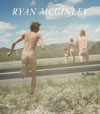
Ryan McGinley: Whistle for the Wind is the first major monograph of the artist's career. It features written work by novelist and critic Chris Kraus, writer, artist, and activist John Kelsey, and filmmaker Gus Van Sant. It was published by Rizzoli New York in June 2012.
Ryan McGinley: Whistle for the Wind is featured in Edition: Rizzoli: New York; other work by McGinley is featured in Edition: Paradise Found and Edition: Guest Editor, Stephan Breuer
Ryuichi Sakamoto
Ryuichi Sakamoto was born on January 17, 1952 in Tokyo, Japan. As a child, he became a fan of English rock (the first record he bought was “Tell Me” by the Rolling Stones) and French Impressionistic music, Debussy in particular. At age 11, he began studying music under Professor Matsumoto at Tokyo National University of Fine Arts and Music. He then received a BA in Composition and MA with a concentration in electronic and ethnic music. In 1977, he began working as a composer, arranger, and studio musician with many of Japan’s most popular musicians. In 1978, he formed Yellow Magic Orchestra with Haruomi Hosono and Yukihiro Takahashi. The group became an international sensation and helped pioneer electropop. Sakamoto is known for crossing musical and technological boundaries in his compositions for his solo albums, work for Yellow Magic Orchestra, and soundtracks. He has recorded numerous albums since 1978 and received many awards, included the Golden Pine Lifetime Achievement Award at the International Samovar Film Music Festival in 2013. He was diagnosed with oropharyngeal cancer in June 2014, but has since returned to work.
Ryuichi Sakamoto is featured in Edition: Guest Editor, Stephan Breuer
Salvador Dalí
Salvador Dalí was a surrealist painter born in Figueres, Spain on May 11, 1904. In the 1920s, he went to Paris and began interacting with artists such as Picasso, Magritte and Miró, which led to Dalí’s first Surrealist phase. As war approached in Europe, Dalí clashed with members of the Surrealist movement and was expelled from the group. Over the following 15 years, Dalí continued to paint, painting a series of 19 large canvases that included scientific, historic or religious themes. Much of his work contained images depicting divine geometry, the DNA, the Hyper Cube, religious themes of chastity, and his wife Gala. He passed away on January 23, 1989 due to heart failure at the age of 84.
Salvador Dalí is featured in Edition: Guest Editor, Stephan Breuer and Edition: Best of the Met
Sergei Rachmaninov
Sergei Rachmaninov was born on April 1, 1873 in Semyonov, Russia to aristocratic parents. His parents, Vasily and Lubov were amateur pianists; aware of their son’s talent, they hired St. Petersburg musician Anna Ornatskaya as a tutor for him. In 1882, the family lost its fortune, so they moved to St. Petersburg, where Rachmaninov was granted a scholarship by the local Conservatory; however, he failed his general exams in the spring of 1885. Rachmaninov, then twelve years old, moved to Moscow where he studied under the strict Nikolai Zverev at the Conservatory. He thrived in this new environment and finished his piano studies in 1891, one year early. In March 1897, his Symphony No. 1 premiered, and received horrible reviews, sending the composer into a depression that stifled his creativity for three years; he recovered and enjoyed success until the Russian Revolution. In 1902, he married his cousin Natalia, and they had two daughters. In 1917, his family estate was seized by the Russian rebels, and he moved his family first to Denmark and then New York in 1918, where he enjoyed a successful career as a concert pianist and part-time composer. He passed away on March 28, 1943 in Beverly Hills, California.
classical.net/music/comp.lst/rachmaninoff.php
Sergei Rachmaninov is featured in Edition: Guest Editor, Stephan Breuer
Stephan Breuer
Stephan Breuer is a French artist primarily concerned with the immaterial. With the vision to create a radically new reality he leads the Flying Studio by uniting a wide array of mediums. Through light, architecture, video, sculpture, sound as well as innovative sensory technologies and scientific research, he explores the boundaries of art with the aim to intensify our visionary and sensory perceptions.
In his latest exhibition “Futur Absolu” at the National Museum of The Imperial Palace of Compiegne supported by French Ministry of Culture and the RMN/Grand Palais, he presented "Prism Atemporal", a monumental immaterial light sculpture, impacting the visitors with a truly radical experience, offering a new perception of space and time and a vision of an absolute future based on altruism.
Stephan Breuer is featured in Edition: Come & Play and Edition: Guest Editor, Stephan Breuer
Steve Reich
Steve Reich was born in New York in 1936 and raised in between New York and California. He attended Cornell University and graduated with honors in 1957 with a degree in Philosophy. He then began studying composition with Hall Overton and from 1958-61 he attended the Juilliard School of Music. He received his MA in Music from Mills College in 1963. In the mid-late 1960s, Reich was one of the pioneers of Minimal music; his music is known for its repetition, steady pulse, rigorous structures, and combination of non-Western influences. During his career, he has studied the Gamelan, African drumming at the University of Ghana, and traditional forms of chanting Hebrew scriptures. Reich’s work is internationally revered and has been performed across the world.
Steve Reich is featured in Edition: Guest Editor, Stephan Breuer
Tetsuo Kondo
Tetsuo Kondo was born in Ehime Prefecture, Japan in 1975. In 1999, he graduated from the Nagoya Institute of Technology and then began working at Kazuyo Sejima & Associates, SANAA. He remained there until establishing Tetsuo Kondo Architects in 2006. Condo is currently an adjunct lecturer at Tokyo University of Science, Japan Women’s University, and Hosei University. Tetsuo Kondo Architects collaborates with German environmental engineering firm Transsolar to create art pieces known as “Cloudscapes”, that fill indoor spaces with an artificial cloud.
Tetsuo Kondo is featured in Edition: Guest Editor, Stephan Breuer
Thomas Ruff
Thomas Ruff, born in 1958, is a German photographer who's work explores a breadth of themes reflected in a broad range of techniques. Ruff's work has been the subject of solo exhibitions at prominent international venues and held in museum collections worldwide. Ruff continues to work and live in Dusseldorf, Germany.
davidzwirner.com/artists/thomas-ruff/
Thomas Ruff is featured in Edition: Love + Sex baby and Edition: Guest Editor, Stephan Breuer
Trisha Donnelly
Trisha Donnelly is a conceptual artist born in San Francisco, California in 1974. She received a BFA from the University of California, Los Angeles in 1995 and a MFA from Yale University in 2000. Her first work that gained attention was Untitled (Jumping) from 1999, in which she imitates, while jumping in and out of the video frame on an unseen trampoline, a variety of musicians in states of musical raptures. Her body of work employs a variety of mediums, ranging from drawing, sculpture, photography, painting, text, and video. She has had numerous solo and group exhibitions at museums and galleries across the globe and was awarded the Central Insurance Prize in Cologne in 2004. She currently lives and works out of San Francisco.
caseykaplangallery.com/cat/artists/donnelly/
Trisha Donnelly is featured in Edition: Guest Editor, Stephan Breuer
Ugo Rondinone
Ugo Rondinone was born in Brunnen, Switzerland in 1964. He attended the Hochschule for Angewandte Kunst (University of Applied Arts) in Vienna from 1986-90. He’s participated in numerous group and solo exhibitions in Europe and the US. In 2007, he represented Switzerland at the Venice Biennale. He currently lives and works in New York.
sadiecoles.com/artists/rondinone
Ugo Rondinone is featured in Edition: Guest Editor, Stephan Breuer
Vincent van Gogh
Vincent van Gogh was born on March 30, 1853 in Groot-Zundert, Netherlands. Van Gogh was a self-taught painter whose work, notable for its impasto and color, highly influenced 20th century art. He struggled with mental illness and remained relatively unknown and poor throughout his life. In 1886, van Gogh decided to move to Paris and showed up, uninvited at his brother Theo’s apartment. While in Paris, he was exposed to the art of the Impressionists. He moved to the village of Arles in the south of France in February 1888. During this time, he is known to have spent his money on painting supplies rather than food; he became sickly, both mentally and physically. Theo enlisted the help of painter Paul Gauguin to watch over van Gogh, but they two soon began to have constant arguments. After one of their fights, Gauguin left, and van Gogh is said to have cut off his ear with a razor. He was hospitalized and released on January 7, 1889; however, the people of Arles petitioned that van Gogh was dangerous and had him moved to an asylum in Saint-Rémy-De-Provence. Dr. Paul Gachet offered to have van Gogh as a patient, so the artist moved to Auvers. On July 27, 1890 van Gogh went out to paint as he usually would; however, he shot himself in the chest with a pistol and passed away two days later with his beloved brother at his side at the young age of 37.
Vincent van Gogh is featured in Edition: Guest Editor, Stephan Breuer
Vladimir Horowitz
Vladimir Horowitz was born in Kiev, Ukraine on October 1, 1903. His mother was a pianist and gave him lessons from an early age. He enrolled at the Kieve Conservatory in 1912, remaining there until 1919. He performed Sergei Rachmaninov’s Piano Concerto No. 3 in D minor, Op. 30 for his graduation and soon began touring and performing across Russia and traveling to Berlin, London, and New York City. He made his American debut at Carnegie Hall in 1928. In 1932 he met conductor Arturo Toscanini, and the two began to perform and record music together. The following year he married Toscanini’s daughter Wanda. They had one daughter, Sonia, who was born in 1934. The family officially moved to New York in 1940, where they would remain until his death on November 5, 1989. Horowitz is regarded as one of the most talented pianists of the 20th century.
Vladimir Horowitz is featured in Edition: Guest Editor, Stephan Breuer
Walter De Maria
Walter De Maria was born in Albany, California in 1935. His first interest was in music, and he then studied history and art at the University of California, Berkeley from 1953-59. He moved to New York City a year later and became involved in the music and Minimalism art scenes. His most famous work is "The Lightning Field", which consists of 400 stainless steel poles arranged in a grid in Catron County, New Mexico. He passed away in 2013, and his work is represented by the Gagosian Gallery.
gagosian.com/artists/walter-de-maria
Walter De Maria is featured in Edition: Paradise Found and Edition: Guest Editor, Stephan Breuer
Wolfgang Tillmans
Wolfgang Tillmans is a German fine-art photographer born in 1968 in Remscheid, Germany. Since the early 1990s, his work has epitomized a new kind of subjectivity in photography, pairing intimacy and playfulness with social critique and questioning of existing values and hierarchies. He studied at Bournemouth and Poole College of Art and Design at Bournemouth, England from 1990-92. In 2000, he became the first photographer and the first non-British artist to receive the Turner Prize. Since 2012, he has been a member of the Akademie der Künste, Berlin, and he was appointed a member of the Royal Academy of Arts, London in 2013. Tillmans views the printed page as an important venue for his work and is deeply involved in the publication of his artist books and regularly contributes to magazines. His work is in collections worldwide, and he has been the subject of many solo exhibitions. He currently lives and works in Berlin and London.
Wolfgang Tillmans is featured in Edition: Guest Editor, Stephan Breuer and Edition: Best of the Met
Yoko Ono
Japanese-born artist, musician, and activist Yoko Ono was born in February 18, 1944. In the early part of the 1950s, she along with her family moved to New York City. Ono subsequently enrolled at Sarah Lawrence College. It was at this point that Ono began expressing her ideas as an artist. In 1966, while previewing her own art show in London, she met Beatles band member John Lennon and the pair soon married. Ono is also known for philanthropic contributions and initiatives towards the arts, peace, and AIDS.
Yoko Ono is featured in The Music Edition, Guest Editor, Jonathan Galkin / DFA and Edition: Guest Editor, Stephan Breuer
Yves Klein
Yves Klein was a French artist born in 1928 in Nice, France. Klein is touted as the most influential, prominent, and controversial French artist to emerge in the 1950s. He is remembered for his use of a single color, a rich shade of ultramarine that he made his own: International Klein Blue. His success, however, is largely attributed to attacking many of the ideas that underpinned the abstract painting that had been dominant in France since the end of the Second World War. Skeptics of abstract art have always alleged that the viewers do more work than the artist, investing the form with their own feelings rather than discovering the artist’s. Viewed in this light, Klein’s monochrome blue paintings might be read as a satire on abstract art, for not only do the pictured carry no motif, but Klein insisted there was nothing there at all, only ”the void”. He passed away in Paris on June 6, 1962.
Yves Klein is featured in Edition: Guest Editor, Stephan Breuer