

Guest Editor Bryan Leitgeb
Bryan Leitgeb was born in Flint, Michigan in 1973. He graduated from New York University in 1996. Under the imprint Ser a.k.a. Seres a.k.a The Serth, he released a number of LPs, CDs, & 7” recordings with the No Neck Blues Band (NNCK) and VIZUSA. In 2010 he opened Mast Books with his wife, James McKee, in NYC’s East Village.
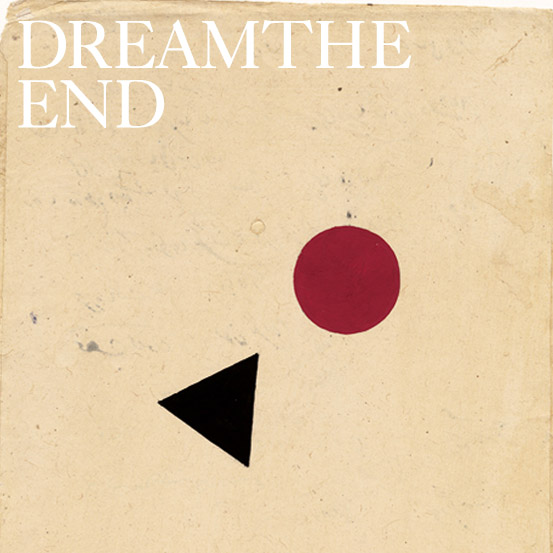
Featuring Cover Artwork from Tantra Song.
An uncharted land not governed by rules: each work determines its own medium and form according to its needs. The concept itself is better understood by what it is not, rather than what it is. Approaching it, we are pioneers again, and shall continue to be so as long as there’s plenty of elbow room and no neighbors around for miles.
–Dick Higgins
Alexander Buchner
Alexander Buchner is known as an authority on musical instruments, largely through the success of his book “Musical Instruments Through The Ages”. The works featured here are excerpted from “Folk Music Instruments of the World”, published by Crown Publishers, Inc, in 1972.
Alexander Buchner is featured in Edition: Guest Editor, Bryan Leitgeb
Bas Jan Ader
Bas Jan Ader was born in 1942 in the Netherlands. He attended the Otis Art Institute and went on to teach art and study philosophy at Claremont Graduate School. In 1970, he entered the most productive period of his career, beginning with his first film “Fall 1”. In 1975, he mysteriously disappeared while on a voyage to cross the Atlantic in a 12.5 foot sailboat. The voyage was the middle part of a triptych called “In Search of the Miraculous”. Six months after his departure, his boat was found, half-submerged off the coast of Ireland.
Bas Jan Ader is featured in Edition: Guest Editor, Bryan Leitgeb
Bruce Conner
Bruce Conner was born in Kansas in 1933. He received his BFA from Nebraska University in 1956 and went on to study at the Brooklyn Museum Art School and University of Colorado. He moved to San Francisco in 1957 with his wife Jean Sandstedt and quickly became a part of the Beat community, founding the Rat Bastard Protective Association. He first became known for his assemblage sculptures, but it was the short movies he made that established him as one of the most important figures in postwar independent filmmaking. He has exhibited at museums and galleries worldwide, and is now part of many permanent collections including the Whitney Museum of Art in New York, the Musee National d’Art Moderne at the Centre Pompidou in Paris, and the Hirschhorn Museum and Sculpture Garden in Washington DC. He passed away in 2008.
Bruce Conner is featured in Edition: Guest Editor, Bryan Leitgeb
Bruno Munari
Bruno Munari was born in Milan in 1907. He, along with Gillo Dorfles, Gianni Monnet, and Atanasio Soldati, founded Movimento Arte Concreta, or the Italian Movement for Concrete Art. He has received numerous awards, including the Japan Design Foundation in 1985 “for the intense human value of his design”, an award from Accademia dei Lincei for his graphic work in 1988, and the ADCI Milan Hall of Fame in Creativity and Communication in 1990. He passed away in 1998.
Excerpted from "Immagini Della Realta", published by Danese Milan in 1977.
Bruno Munari is featured in Edition: Guest Editor, Bryan Leitgeb
Carl Andre
Carl Andre was born in 1935 in Massachusetts. His first public exhibition of work was at the Tibor de Nagy Gallery in 1965. He went on to show at the Guggenheim Museum in New York, the Ace Gallery in California, Galleria Gian Enzo Sperone in Italy, Konrad Fischer in Düsseldorf, and Galerie Daniel Templon in Paris. He is represented by the Paula Cooper Gallery in New York, Sadie Coles HQ in London, and Yvon Lambert Gallery in Paris.
Excerpted from "Carl Andre Hollis Frampton 12 Dialogues 1962-1963", published by the Press of Nova Scotia College of Art and Design & New York University Press with the assistance of Parasol Press in 1981.
Carl Andre is featured in Edition: Guest Editor, Bryan Leitgeb
Charles Olson
Charles Olson was born in 1910 in Worchester, MA. He graduated from Wesleyan University in 1933 and subsequently enrolled at Harvard University from 1936-1938. He was a major influence on postmodern American poetry and was a leading voice of the “Black Mountain Poets”, which included Robert Creeley, Edward Dorn, and Joel Oppenheimer. His most notable works include “The Maximus Poems”, “Projective Verse”, and the essay "Human Universe" published in 1951. He passed away in 1970.
Charles Olson is featured in Edition: Guest Editor, Bryan Leitgeb
D.A. Levy
D.A. Levy was born in 1942 in Cleveland, Ohio. After a short stint in the Navy, Levy read and wrote everything he could in order to lose himself in the search for infinity. He found a spiritual outlet in Buddhism and a creative outlet in publishing on a small printing press. He is most known for “The North American Book of the Dead”, “Cleveland Undercovers”, “Suburban Monastery Death Poem”, and “Tombstone as a Lonely Charm”. He helped edit and write the single issue of “The Marijuana Review” in 1968 and published Cleveland’s first underground newspaper, “The Buddhist Third-Class Junkmail Oracle” in 1967 and 1968. He passed away in 1968.
Excerpted from “The Tibetan Stroboscope”, published by Ayizan Press in 1968.
D.A. Levy is featured in Edition: Guest Editor, Bryan Leitgeb
Dieter Roth
Born in Hannover, Germany in 1930, Dieter Roth is known as a unique member of the Fluxus movement. The Icelandic artist's paintings, sculptures, artist's books, installations and poetry were first featured in the Museum College of Art in Philadelphia. His work explored Constructionism and later Deconstructionism, toying with the variability, impermanence and irony of materials. Roth taught in the architecture department of Yale University, at the Rhode Island School of Design in Providence, at the Watfort School of Art in London and the Düsseldorf Art Academy and passed away in 1998.
Courtesy of Hauser & Wirth New York Gallery
Dieter Roth is featured in Edition: Guest Editor, Bryan Leitgeb
Ed Sanders
Ed Sanders was born in Kansas City, MO, in 1939. He graduated from New York University in 1964. In 1962, he founded the avant-garde journal “Fuck You”. He opened the Peace Eye Bookstore in New York City, which soon became a gathering place for bohemians, writers, and radicals. On January 1, 1966, policed raided the Peace Eye Bookstore and charged Sanders with obscenity. This event led to his face on the February 17, 1967 cover of Life Magazine, proclaiming him “a leader of New York’s Other Culture”. He founded the band The Fugs with Tuli Kupferberg in 1964. He also founded the Investigative Poetry movement, writing the 1976 manifesto “Investigative Poetry” published by City Lights Books. He received a Guggenheim Fellowship in poetry in 1983 and a National Endowment for the Arts Fellowship in poetry in 1987. In 1997, he was awarded a grant from the Foundation for Contemporary Arts Grants to Artists Award. He currently lives in Woodstock, NY, inventing musical instruments and publishing the online “Woodstock Journal”.
Excerpted from "Peace Eye Bookstore" Catalogue 7 and 8, published by Ed Sanders and Fuck You Press in 1964.
Ed Sanders is featured in Edition: Guest Editor, Bryan Leitgeb
El Lissitzky
El Lissitzky was born in Pochinok, Russia in 1890. His edict, "das zielbewußte Schaffen" (goal-oriented creation), influenced his work in political ways as he designed many exhibitions and propaganda for the Soviet Union in the early 20th century. His work in the Suprematist art movement greatly influenced the development of the Bauhaus and Constuctivist movements, and later the field of graphic design. El Lissitzky illustrated Vladimir Mayakovsky's 1923 book of poems, "For the Voice". He died in Moscow in 1941.
El Lissitzky is featured in Edition: Guest Editor, Bryan Leitgeb and Edition: Guest Editor, Tom Burr
Embryo
Embryo is a musical collective from Munich, founded by Christian Burchard and Edgar Hoffmann in 1969. To date more than 400 musicians have played with the collective, but longtime members include Dieter Serfas, Roman Bunka, Uve Mullrich, Michael Wehmeyer, Chris Karrer, Lothar Stahl, and Jens Polheide. They have played festivals around the globe, include the Mumbai Jazz in 1979, Reading in England in 1973, Port Harcourt Jazz in Nigeria in 1987, and Wakayama in Japan in 1991. They were awarded the German World Music Award RUTH at the TFF.Rudolstadt Festival in 2008.
Embryo is featured in Edition: Guest Editor, Bryan Leitgeb
Emma Kunz
Emma Kunz was born in 1892 in Switzerland. In her lifetime, she was a healer and a researcher, using her abilities of telepathy and prophecy. She began drawing in 1938 and in 1941, she discovered the gift of the Würenlos healing rock, which she named AION A. She passed away in 1963.
Emma Kunz is featured in Edition: Guest Editor, Bryan Leitgeb
Ephrem Tamiru
Ephrem Tamiru is one of Ethiopia’s most beloved popular musicians.
www.addismood.com/efrem-tamiru
Ephrem Tamiru is featured in Edition: Guest Editor, Bryan Leitgeb
George Maciunas
Lithuanian-born American artist George Maciunas was the founding member and central coordinator of the Fluxus movement, an international community of artists, architects, composers, and designers. Members include Yoko Ono, Joseph Beus, George Brecht, and Dick Higgins. Maciunas was born in 1931, and trained as an architect and graphic artist before he began buying and repurposing SoHo building space in his 30s. He deemed the dilapidated spaces "fluxhouses" and established them as locations where artists could live and work, dividing resources and producing. Through fluxhouses, he single-handedly put SoHo on the map with 16 developed buildings and a creative new model for real estate development, which is still the standard practice for current artist lofts and coops around the world. He died in Boston in May 1978. Included are scores made in homage of other fluxus artists.
https://www.fluxus.org/FLUXLIST/maciunas/
https://georgemaciunas.com/?page_id=2
George Maciunas is featured in Edition: Guest Editor, Bryan Leitgeb and Edition: Guest Editor, Tom Burr
Gordon Matta-Clark
Gordon Matta-Clark was born in New York on June 22, 1943 and grew up in New York, Paris, and Chile. He studied architecture at Cornell University, where he met Robert Smithson and Dennis Oppenheim; however, he did not practice as a conventional architect. In the 1970s, he helped organize 112 Greene Street, an exhibition space showing new art. He also collaborated on Food, a combined restaurant and performance piece; made Garbage Wall, a prototype shelter for the homeless; and was active in building SoHo as an artists' community. He addressed popular culture in the 1973 Photoglyphs, hand-colored black-and-white photographs depicting New York's burgeoning graffiti. Matta-Clark is best known for his 'anarchitecture' of the 1970s, which were temporary works created by sawing or carving out sections of abandoned buildings and then documented in photography or film. One of the most famous examples is his 1974 piece, Splitting, in which a wooden house in Englewood, New Jersey was sliced through. Matta-Clark passed away from cancer on August 27, 1978. The original Sauna, located in an apartment on East 4th Street and featured in the film Sauna View, was Matta-Clark's first cut work. After Matta-Clark moved out, this sauna was removed by Alexander Schröder, the founder of Galerie Neu, which represents Tom Burr, Ull Hohn, Hilary Lloyd, and Josephine Pryde.
Gordon Matta Clark is featured in Edition: Guest Editor, Bryan Leitgeb and Edition: Guest Editor, Tom Burr
Hans Jenny
Hans Jenny was born in 1904 in Basel, Switzerland. He was a physician and natural scientist credited with being the “father” of cymatics, the study of visible sound and vibration. He published the first volume of “Cymatics: The Study of Wave Phenomena” in 1967, which documents the effects of sound vibrations on fluids, powders, and liquid paste. The second volume was published in 1972, the same year he passed away.
Excerpted from "Kymatik Cymatics", published by Basilius Presse in 1967.
Hans Jenny is featured in Edition: Guest Editor, Bryan Leitgeb
Hans Richter & Marcel Duchamp
The German modernist, Hans Richter, was born in Berlin in 1888. A painter, graphic artist, avant-gardist, film-experimenter and producer, Richter was one of the original visionaries of Dada. He studied art at the Academy of Art in Berlin, the Academy of Art in Weimar, and for a short period in Paris, and later taught at the Film Institute of City College in New York after being forced to leave Germany due to his involvement in the Association of Revolutionary Artists. Hans Richter died in 1976.
Marcel Duchamp's bio can be found here.
Hans Richter is featured in Edition: Guest Editor, Bryan Leitgeb
Harry Smith
Harry Everett Smith was born in 1923, in Portland, Oregon. Smith studied anthropology at the University of Washington from 1943-44. Soon after, in San Francisco, Smith began to build a reputation as one of the leading American experimental filmmakers. He showed frequently in the "Art in Cinema" screenings organized by Frank Stauffacher at the San Francisco Museum of Modern Art. Smith received a Solomon Guggenheim grant in 1950. In 1952, Folkways Records issued Smith's Anthology of American Folk Music. Released in three volumes of two discs each, the 84 tracks of the anthology are recognized as having been a seminal inspiration for the folk music revival of the 1950s and 1960s. The 1997 reissue by the Smithsonian was embraced with critical acclaim and two Grammy awards. Smith spent his last years as "shaman in residence" at Naropa Institute, where he offered a series of lectures, worked on sound projects, and continued collecting and researching. In 1991 he received a Chairman's Merit Award at the Grammy Awards ceremony for his contribution to American Folk Music. Smith died at the Chelsea Hotel in 1991.
Excerpted from “Harry Smith: The Avant-Garde in the American Vernacular (Issues & Debates)” by Andrew Perchuk and Rani Singh, published by Getty Research Institute in 2010.
Harry Smith is featured in Edition: Guest Editor, Bryan Leitgeb
Holbrook Teter and Michael Myers
Zephyrus Image, the brainchild of Holbrook Teter & Michael Myers, was a Northern Californian press that operated through the 1970s, a time of great social change in America. With their own idiosyncratic methods they produced subversive, anarchic works of great wit and elegance that lampooned the foolish. They subverted the gallery system and ignored normal channels of distribution open to small presses, taking their work to the streets to give away.
Holbrook Teter and Michael Myers are featured in Edition: Guest Editor, Bryan Leitgeb
Jess
Jess Collins, more commonly known as "Jess" was born in 1923 in Long Beach, California. In 1949, he enrolled at the California School of the Arts. His work primarily consists of a series of collages and paintings with thematic incorporations of occult symbolism, alchemy, and male beauty. His work is included in the collections at the Museum of Modern Art, the Metropolitan Museum of Art, the national Gallery of Art, and the San Francisco Museum of Modern Art. In 1951, Jess met poet Robert Duncan, a meeting that would eventually lead to an intimate relationship lasting until Duncan's death in 1988. Jess passed away in 2004.
Jess is featured in Edition: Guest Editor, Bryan Leitgeb
John Fahey
Ranked the 35th in the Rolling Stone Magazine's "The 100 Greatest Artists of All Time" in 2003, John Fahey was a fingerstyle guitarist who pioneered the steel-string acoustic guitar as a solo instument. Often described as the founder of American Primitivism, Fehey's roots can be found in the folk and blues traditions in American music and he later introduced classical, Portuguese, Braziliam and Indian music to his sound. He died of heart surgery complications in 2001.
John Fahey is featured in Edition: Guest Editor, Bryan Leitgeb
Jon Beacham
Jon Beacham was born in Cleveland, OH, in 1979. He studied art in New York and San Francisco. His work focuses on the American landscape, space, and materials. Methods of production include letterpress printing, collage, 16mm film, and photography. He operates The Brother In Elysium publishing imprint, which is an off-shoot of Hermitage: an experimental space in Beacon, New York. His current studio is in Brooklyn, NY.
Courtesy of the artist.
Jon Beacham is featured in Edition: Guest Editor, Bryan Leitgeb
Josef Albers
Josef Albers was born in Bottrop, Germany, in 1888. He played a leading role in transmitting the modern design principles of the Bauhaus to the United States. In 1915, he earned a diploma from the Royal Art School in Berlin and later attended the School of Applied Arts in Essen. He moved to Munich in 1920 to study at the academy, and one year later enrolled at the Bauhaus in Weimar. He began to work in stained glass and printmaking and in 1923 became the first Bauhaus student promoted to the role of instructor, teaching the introductory course. When the Nazis closed the school in 1933, Albers and his wife Anni, a textile artist at the Bauhaus, were invited to Black Mountain College in North Carolina. Albers developed his own theories regarding spatial effects, contrasts, and harmonies of colors and in 1963 published an influential book Interaction of Color, which elucidated his color theories. He was a key faculty member at Black Mountain College until 1949, though he also taught at Harvard University and lectured in Latin America. In 1950 Albers became the head of the Department of Design at Yale University. A venerated teacher and theorist, Albers died in New Haven in 1976.
Josef Albers is featured in Edition: Guest Editor, Bryan Leitgeb
Laos: Lam Saravane
The vocal art of "lam" and the "khen" mouth organ (the national instrument of Laos) are performed here by exceptional musicians. The album “Laos: Lam Saravane - Music pour le khene” was released on the record label Ocora.
Laos: Lam Saravane is featured in Edition: Guest Editor, Bryan Leitgeb
Len Lye
Len Lye was born Leonard Chalres Huia Lye in New Zealand in 1901. He was known primarly for his experimental films and kinetic sculptures. His films are held in archives such as the New Zealand Film Archive, British Film Institute, Museum of Modern Art in New York City, and the Pacific Film Archive at University of California, Berkeley. Lye's sculptures are found in the collections of the Whitney Museum of American Art, the Art Institute of Chicago, the Albright-Knox Art Gallery and the Berkeley Art Museum. Associated with many visionary art groups, beginning with London’s modernist Seven and Five Society in the 1920s, the International Surrealist Movement in the 1930s, and the Kinetic Art Movement in the 1960s, Lye is renowned for his influence in hand-crafted abstract cinema. He died in 1980 in Warwick, New York.
Len Lye is featured in Edition: Guest Editor, Bryan Leitgeb
Lew Welch
Lew Welch was born in 1926 in Phoenix, Arizona. He attended Reed College in Portland, Oregon, and moved to New York City after graduating. He worked writing copy in the advertising industry and is credited with the slogan “Raid Kills Bugs Dead”. He soon moved to Oakland and began working for Montgomery Ward’s advertising department. He also became involved with the San Francisco literary scene and was an active participant in Beat culture. He passed away in 1971.
Lew Welch is featured in Edition: Guest Editor, Bryan Leitgeb
Lionel Ziprin
Lionel Ziprin was born in 1924 in the Lower East Side of Manhattan, New York. He was a poet who spent most of his life attempting to find a large record label to distribute a 15-LP set of Jewish liturgical music performed by his grandfather Nuftali Zvi Margolies Abulafia. He became a beatnik symbol of the Lower East Side, attracting a loose collective to his apartment to speak and exchange ideas which included Robert Frank, Thelonious Monk, and Bob Dylan. Ziprin passed away in 2009.
Excerpted from the first issue of “The Nightjar Review” in November 2005.
Lionel Ziprin is featured in Edition: Guest Editor, Bryan Leitgeb
Man Ray
Born Emmanuel Radnitzky, the modernist American artist was born in Philadelphia, PA, in 1890 and spent most of his career in Paris, France. He was most known for his avant-garde photography but considered himself first and foremost a painter. Associated with the Surrealist and Dadaist movements, his work has been shown at the MoMA New York, the Metropolitan Museum of Art, and the Modern Art Museum of the City of Paris. He died in 1976.
Man Ray is featured in Edition: Guest Editor, Bryan Leitgeb
Marcel Duchamp
Marcel Duchamp was born in 1887 in France. He is considered one of the most important artists of the 20th century and often associated with the Dadaist and Surrealist movements. He challenged conventional thought about artistic processes and art marketing by subversive actions and art. He passed away in 1968 and his work is still exhibited worldwide.
tate.org.uk/art/artists/marcel-duchamp
Marcel Duchamp is featured in Edition: Small Wonder and Edition: Guest Editor, Stephan Breuer
Marian Zazeela
Marian Zazeela is one of the first contemporary artists to use light as a medium of expression. In over three decades of work, she has exhibited a unique iconographic vision in a variety of media encompassing painting, calligraphic drawing, graphics, film, light projection, sculpture, and environment. Marian Zazeela has developed a unique visual language in the medium of light by combining colored light mixtures with sculptural forms to create seemingly three-dimensional colored shadows in radiant vibrational fields. As artistic director of The Theatre of Eternal Music she created the works that form the visual components of Dream House, a sound and light environment in which she collaborated with composer La Monte Young. She also studied music and singing with her mentor Pandit Pran Nath and accompanied him in concert for 26 years until his death in 1996. In February 1999, she and La Monte Young reinstalled the Dream House for an exhibition at the Musée Art Contemporain in Lyon.
Marian Zazeela is featured in Edition: Guest Editor, Bryan Leitgeb
Mauricio Kagel
Maurico Kagel was a German-Argentine composer born in Buenos Aires in 1931. He joined the Agrupación Nueva Musica of Buenos Aires at the age of 16 and had his first piece, PALIMPSESTOS, published in 1950 at the age of 19. He was a co-founder of the Cinémathèque Argentine and also founded the Colon Theatre's orchestra in Buenos Aires. In 1957 he moved to Cologne, Germany, where he lived until his death in 2008. He taught at the International Summer School at Darmstadt as well as State University of New York at Buffalo and at the Berlin Film and Television Academy as a visiting lecturer. He was the professor for new music theatre at the Cologne Conservatory from 1974 to 1997. In 2000 he received the Ernst von Siemens Music Prize. He is known for his many contributions to Musical and Contemporary Theatre.
Images excerpted from the November 1970 issue of "Interfunktionen No. 5", edited by Friedrich Wolfram Heubach.
Mauricio Kagel is featured in Edition: Guest Editor, Bryan Leitgeb
Miroslav Tichý
Miroslav Tichý was born in the Czech Republic in 1926. He took thousands of surreptitious pictures of women in his hometown of Kyjov from 1960 to 1985 using homemade cameras constructed out of cardboard tubes, tin cans, and other at-hand materials. During the Communist regime in Czechoslovakia, he was considered a dissident. His photographs were largely unknown until an exhibition at the 2004 Biennial of Contemporary Art in Seville. Since then, he has shown at the Nolan/Eckmann Gallery in New York, the Centre Pompidou in Paris, The Museum of Modern Art in Frankfurt, and the Wilkinson Gallery in London. He passed away in April 2011.
Miroslav Tichý is featured in Edition: Guest Editor, Bryan Leitgeb and Edition: Love + Sex baby
NNCK
NNCK is a seven-member free-form improvisational musical collective based in Harlem, New York. Formed in 1992, NNCK was initially inspired by the Louisville cum NYC art rock of Circle X, as well as underground groups like Royal Trux and Harry Pussy. NNCK came to embrace, among other things, Jean Crotti and Susanne Duchamp’s Tabu, Japanese ghost mythology, LSD and psychedelic consciousness, lovecraftian phantasmagoria, and Kasmir Malevitch’s suprematism. NNCK has published over 30 LPs and CDs in the US and abroad, on labels including Alga Marghen, Locust Music, 5RC, Staubgold, Ecstatic Peace!, SERES, and their own S@1 imprint. Their latest release is "YTIU" LP (kelippah), in part a meditation on the life and death of Pink Floyd founding member Richard Wright.
NNCK is featured in Edition: Guest Editor, Bryan Leitgeb
Oidupaa Vladimir Oiun
Oidupaa Vladimir Oiun is a throat singer from Tuva, Russa. He sings in the kargyraa style, which is a deep undertone technique. He was seen as a threat by the occupying Russian forces for singing protest songs and was falsely convicted on trumped up charges of murder and the corruption of minors. He spent 33 years in the work camps where the album “Divine Musice from Jail” was recorded. He is a living legend in the Tuva Republic, and continues to perform today.
Oidupaa Vladimir Oiun is featured in Edition: Guest Editor, Bryan Leitgeb
Rail Band
Rail Band is a popular Malian music group created in 1970, in part through sponsorship with the Ministry of Information in Mali. The group's music is an assemblage of Afro-latin centric sounds that incorporate varying Malian and Guinean rooted musical traditions. Rail Band has proven to be incredibly influential on West African music and continues to perform throughout the world.
Rail Band is featured in Edition: Guest Editor, Bryan Leitgeb
Ray Johnson
Ray Johnson was born in Detroit, Michigan, in 1927. In 1945, he left Detroit to attend the radically progressive Black Mountain College in North Carolina. He moved to New York City in 1949 and became a part of the American Abstract Artists group. By 1953, he left the group and began collaging fragments from popular culture, calling them “moticos”. He quickly became part of the Pop generation and found occasional work as a graphic designer. In 1958, he began “the New York Correspondence School,” in which he would send mail to recipients directing them to “please send to” another recipient. He has shown at the Willard Gallery in New York, the Feigen Gallery in Chicago and New York, Angela Flowers in London, and Arturo Schwarz in Milan. In 1970, The Whitney Museum of American Art in New York had an exhibit for Johnson’s “New York Correspondence School”. He passed away in 1995.
Courtesy of the collection of William S. Wilson and The Estate of Ray Johnson at Richard L. Feigen & Co.
Ray Johnson is featured in Edition: Guest Editor, Bryan Leitgeb
Rene Daumal
Rene Daumal was born in 1908 in France and was a French spiritual para-surrealist writer and poet. He is known for his novels "A Night of Serious Drinking" and Mount Analogue: A Novel of Symbolically Authentic Non-Euclidean Adventures in Mountain Climbing". Daumal was self-taught in the Sanskrit language and translated some of the Tripitaka Buddhist canon into the French language, as well as translating the literature of the Japanese Zen scholar D.T. Suzuki into French. He was married to Vera Milanova, the former wife of the poet Hendrik Kramer. He died suddenly and prematurely from tuberculosis in 1944 in Paris.
Rene Daumal is featured in Edition: Guest Editor, Bryan Leitgeb
Richard Long
Richard Long was born in 1945 in Bristol, England. He studied at West of England College of Art in Bristol from 1962 until 1965. Long then went on to complete a degree program at St. Martins School of Art in London from 1966 to 1968. His works span various mediums, from photography and paintings, to sculpture. His “White Water Line” painting won the 1989 Turner Prize, which is presented by the Tate Gallery to a British visual artist under the age of 50. His works have been exhibited at Tate Gallery in London, Musée d'Art Moderne et d'Art Contemporain in Nice, Sperone Westwater in New York, and Guggenheim Bilbao in Spain. He currently lives and works in Bristol, England.
Richard Long is featured in Edition: Guest Editor, Bryan Leitgeb and Edition: Paradise Found
Robert Creeley
Robert Creeley was an American poet, born in 1926 in Arlington, Massachusetts. He studied at Harvard University from 1943-1946, subsequently releasing his first poem through the University's Wake publication. His poetry aesthetic is often grouped with the Black Mountain poets, which also include Charles Olson, Robert Duncan, and Allen Ginsberg. Creeley published more than sixty books of poetry throughout his lifetime, most notably "If I Were Writing This", "Just in Time: Poems 1984-1994", "Life & Death", and "For Love: Poems 1950-1960". Creeley passed away in 2005.
Robert Creeley is featured in Edition: Guest Editor, Bryan Leitgeb
Stan Brakhage
Stan Brakhage was born in 1933 in Kansas City, Missouri. He is considered to be one of the most important figures in 20th century experimental film. His most famous film was “Dog Star Mar” (1964) which was one of the key works of the 1960s American avant-garde. Over five decards, Brakhage made nearly 380 films, most of them shot in 8mm or 16mm, and ranging in length from nine seconds to four hours. Almost all had no sound, which he felt might spoil the visual intensity. He taught film history at the University of Colorado from 1981 until he passed away in 2003.
Stan Brakhage is featured in Edition: Guest Editor, Bryan Leitgeb
Tantra Song
The rare lineage of Tantric art evolves from 17th century, hand-written and illustrated religious treatises, which were copied over many generations. The process of painting these works is part of a spiritual practice, and the paintings have specific qualities to guide private meditation. The contemporary result is a distinct visual lexicon used to awaken heightened states of consciousness. The works are anonymously made in India. Once created, they are pinned up and anointed for use as spiritual objects, then discarded once aged and faded.
This collection of rare and abstract Tantric paintings came from the journey of Franck André Jamme to India over 25 years ago. Jamme is one of France's leading contemporary poets and authors and specializes in "art brut", the tantric and tribal art of India. He has curated and contributed to exhibitions in such places as The Drawing Center in New York City, and Centre Pompidou and Beaux-Arts de Paris in France.
Excerpted from "Tantra Song: Tantric Painting From Rajasthan", due out by Siglio Press in Spring 2012.
Please click here to pre-order your copy.
Images are copyrighted and courtesy of Siglio Press.
Tantra Song is featured in Edition: Guest Editor, Bryan Leitgeb
Ted Berrigan
Ted Berrigan (born Edmund Joseph Michael Berrigan Jr.) was born in Providence, Rhode Island, in 1934. He was a prominent figure in the second generation of the New York School of Poets. Frank O’Hara once called his most significant publication, “The Sonnets (1964)”, “a fact of modern poetry”. Berrigan passed away in 1983.
Ted Berrigan is featured in Edition: Guest Editor, Bryan Leitgeb
The Shakers
The United Society of Believers in Christ’s Second Appearing, also known as the Shakers, is an American religious community founded upon the teachings of Ann Lee. They are most known for their cultural contributions to music and furniture design and also their belief of gender equality, which was institutionalized in their society in the 1780s. “Heavenly Visions: Shaker Gift Drawings and Gift Songs” featured approximately 130 drawings, song manuscripts, and other texts inspired by the unique spiritual practices and beliefs of the Shakers.
“Heavenly Visions: Shaker Gift Drawings and Gift Songs” showed at The Drawing Center and was curated by France Morin. The accompanying catalog was published by University of Minnesota Press in 2001.
www.drawingcenter.org/pub_books.cfm?fid=31
The Shakers is featured in Edition: Guest Editor, Bryan Leitgeb
Townes Van Zandt
Townes Van Zandt was born in 1944 in Fort Worth, Texas. He was a country-folk singer/songwriter, performer, and poet. While he did not achieve commercial success in his lifetime, his songs were often covered by musicians such as Emmylou Harris, Willie Nelson, and Bob Dylan. He passed away in 1997.
Townes Van Zandt is featured in Edition: Guest Editor, Bryan Leitgeb
Träd Gräs Och Stenar
Träd Gräs Och Stenar is a Swedish rock band formed in 1969, and a member of the Swedish progg scene. It now consists of Bo Anders Persson, Arne Ericsson, Urban Yman, Torbjörn Abelli, and Thomas Mera Gartz. They have released 7 albums since their formation and still continue to make music in Sweden.
Purchase All Along the Watchtower
Träd Gräs Och Stenar is featured in Edition: Guest Editor, Bryan Leitgeb
Wallace Berman
Known as the “father” of assemblage art, Wallace Berman was an American visual and assemblage artist born in 1926. He became involved in the West Coast Jazz scene and the Beat Movement and his work in a furniture factory led to his creation of sculptures. He created “Verifax Collages” and created a mail art publication, Semina. Berman's work has been shown in the Ludwig Museum, Centre Pompidou, and the Whitney Museum of American Art. He died suddenly in 1976.
Excerpted from Semina, published from 1958-1964.
Wallace Berman is featured in Edition: Guest Editor, Bryan Leitgeb
Walter Benjamin
Walter Benjamin was born in 1892 in Berlin. He was an intellectual, functioning as a literary critic, philosopher, sociologist, translator, radio broadcaster, and essayist. He coined the term “auratic perception”, which describes the aesthetic faculty by means of which civilization may recover an appreciation of myth. He was a member of the Institute of Social Research, which included Max Horkheimer, Herbert Marcuse, and Otto Kirchheimer. He passed away in 1940.
Excerpted from “Illuminations”, published by Schocken in 1969.
Walter Benjamin is featured in Edition: Guest Editor, Bryan Leitgeb